
Hair Transplant UK
Surgeon-led hair transplant clinics across the UK
Considering a hair transplant in the UK? Este Medical Group offers advanced DHI hair restoration with consultation and aftercare support across our UK clinic network. Our approach is designed for patients experiencing receding hairlines, crown thinning, pattern hair loss, thinning density, beard gaps or eyebrow thinning.
Your treatment plan is guided by GMC-registered hair transplant surgeons, including Dr. Ileana Lizzeth Jimenez Andrade, GMC Number 7764470, and Dr. Ilknur Nihal Ardic, GMC Number 7996656. Each plan is based on your donor area, hair loss stage, graft requirement, hairline design and long-term result expectations.
GMC-Registered Hair Transplant Surgeons at Este Medical Group

Dr. Ileana Lizzeth Jimenez Andrade
GMC Number: 7764470

Dr. Ilknur Nihal Ardic
GMC Number: 7996656
Hair transplant at a glance
| Item | Detail |
|---|---|
| Treatment type | DHI hair transplant / Robotic DHI planning support |
| Suitable for | Receding hairline, crown thinning, pattern hair loss, selected beard and eyebrow cases |
| Planning | Surgeon-led consultation and suitability assessment |
| Anaesthetic | Local anaesthetic |
| Downtime | Most visible healing improves within 7–14 days |
| Results timeline | Early shedding can happen first; visible growth usually develops gradually over 6–12 months |
| Final outcome | Final density and maturity usually continue improving over 12+ months |
| Aftercare | Recovery guidance and follow-up support provided |
Why Patients Across the UK Choose Este Medical Group
- 13 UK clinic locations
- Thousands of independent 5★ Trustpilot reviews
- Advanced implantation techniques
- Structured consultation & aftercare process
- Natural hairline design focus
Hair restoration is a medical procedure. We believe it should be approached with clinical planning, transparency, and long-term thinking.
What Is a Hair Transplant?
A hair transplant is a minimally invasive procedure that relocates healthy hair follicles from a donor area (typically the back or sides of the scalp) to areas affected by thinning or balding.
The transplanted follicles retain their genetic resistance to hair loss, meaning results are designed to be long-term when properly planned and maintained.
Hair transplants can address:
- Receding hairlines
- Crown thinning
- Frontal density loss
- Diffuse thinning (in suitable candidates)
Our Hair Transplant Techniques
At Este Medical Group, we tailor technique selection to the individual case.
We offer:
- Advanced Robotic DHI
- Sapphire-based implantation methods
- Precision-controlled extraction techniques
For patients specifically interested in technology-assisted implantation, you can explore our dedicated page on:
Are You Suitable for a Hair Transplant?
- Donor hair density
- Pattern and stage of hair loss
- General health
- Long-term hair stability
- Hair loss has stabilised
- Donor area is strong
- You have realistic expectations
The Hair Transplant Journey
1. Consultation
- Scalp and donor assessment
- Hairline design discussion
- Medical suitability review
- Personalised treatment plan
2. Procedure Day
- Local anaesthetic
- Careful follicle extraction
- Precision implantation
- Same-day discharge
3. Recovery & Growth Timeline
- Weeks 1–3: Shedding phase
- Months 3–4: Initial regrowth
- Months 6–9: Visible thickening
- 12 months: Full result
We provide structured aftercare guidance and ongoing clinic support.
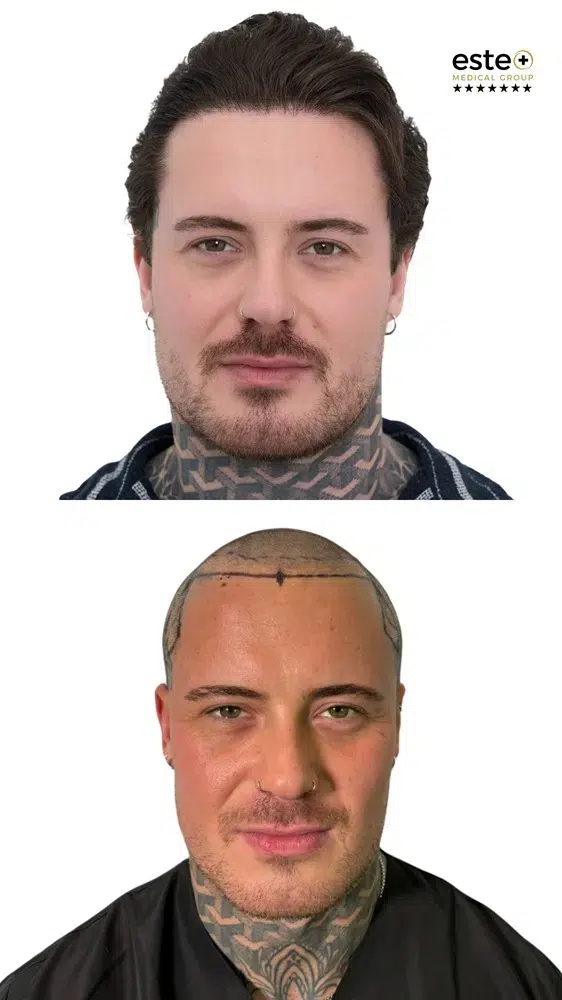
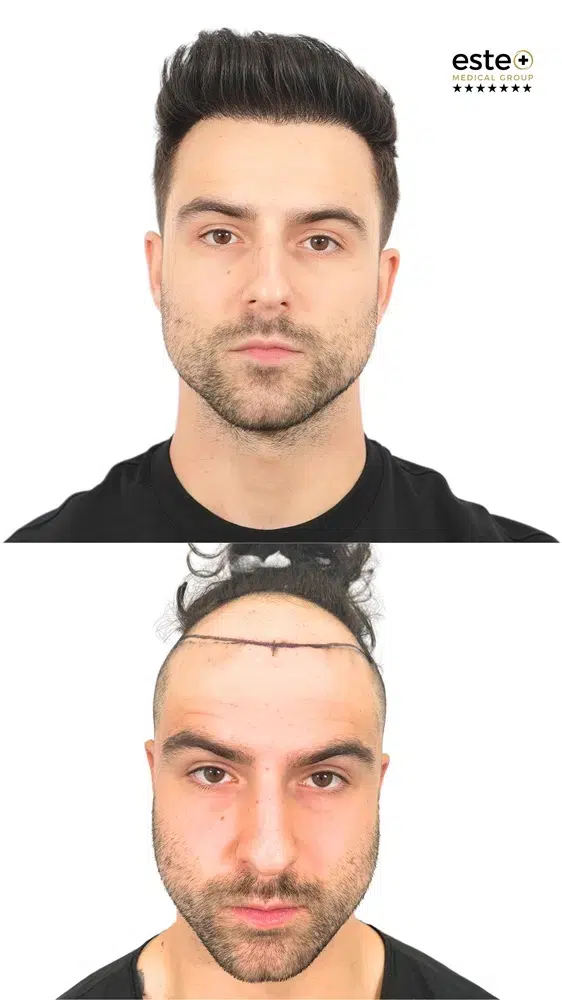
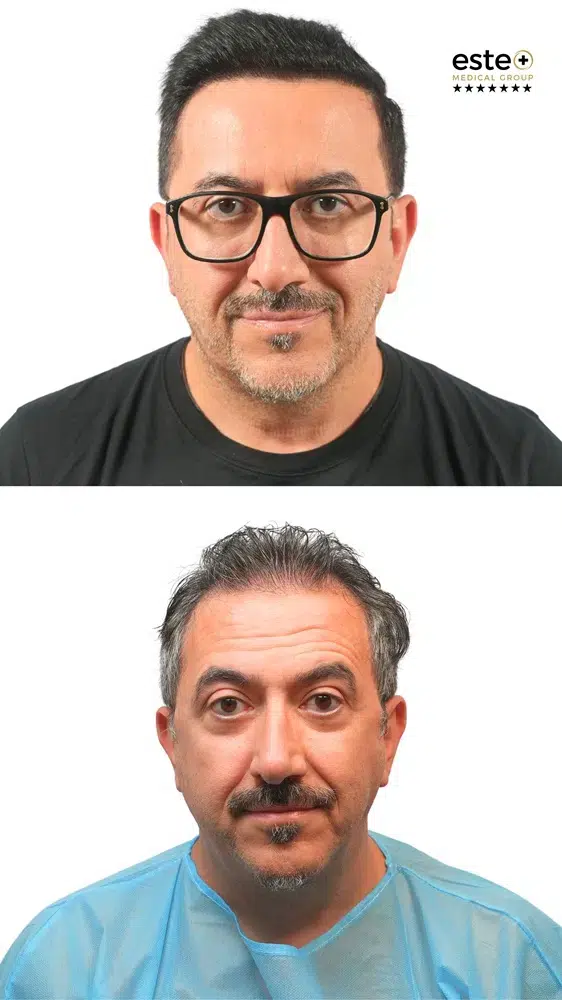
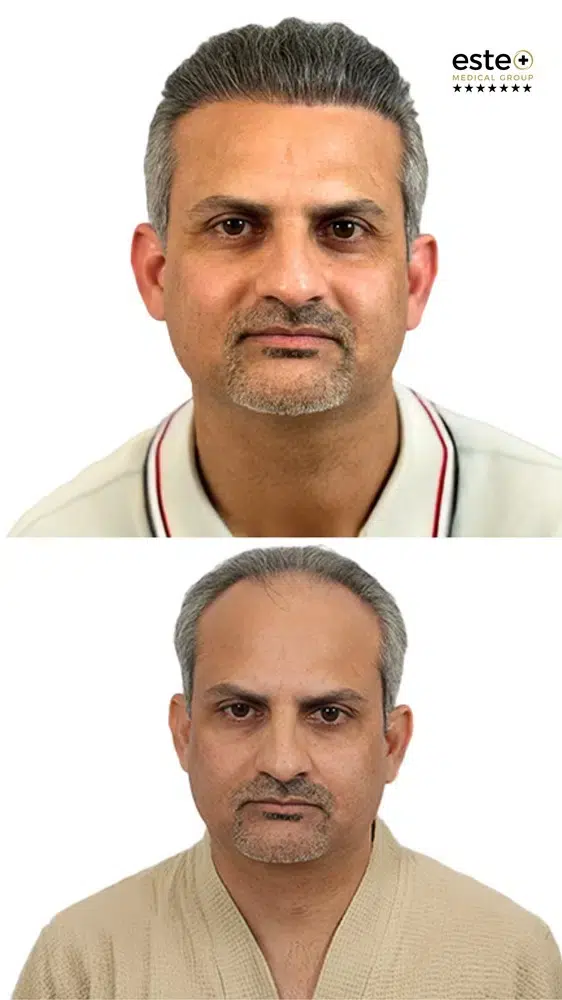
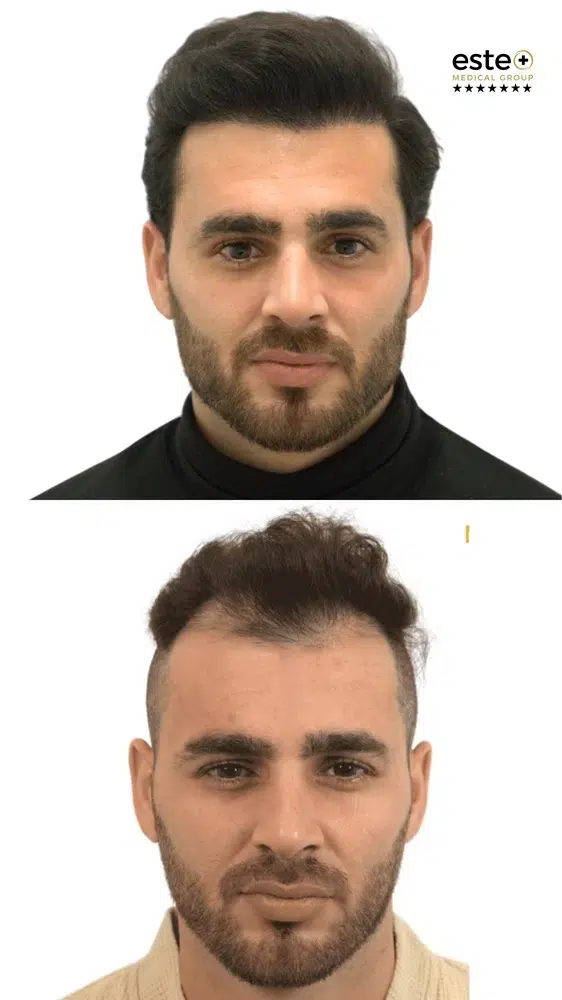
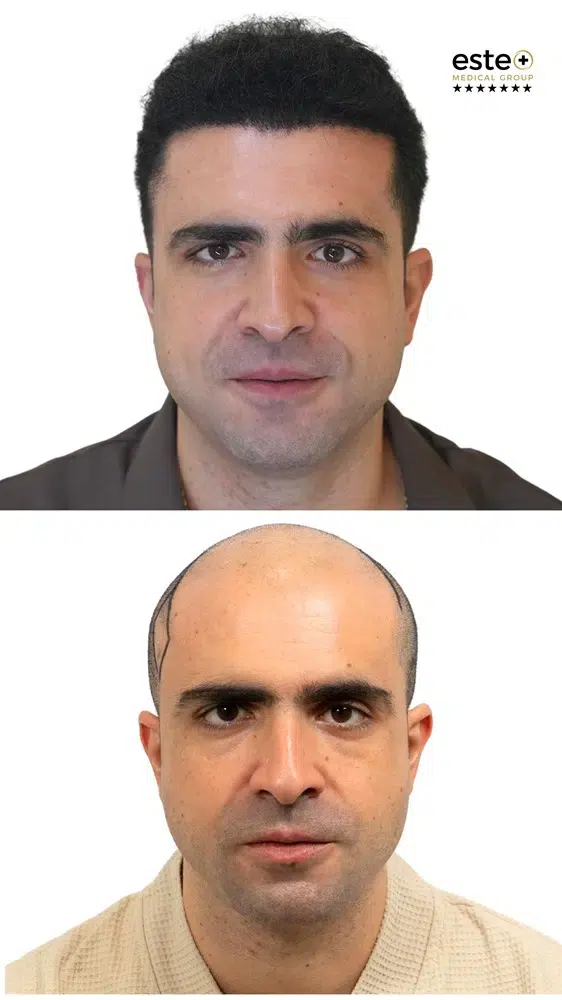
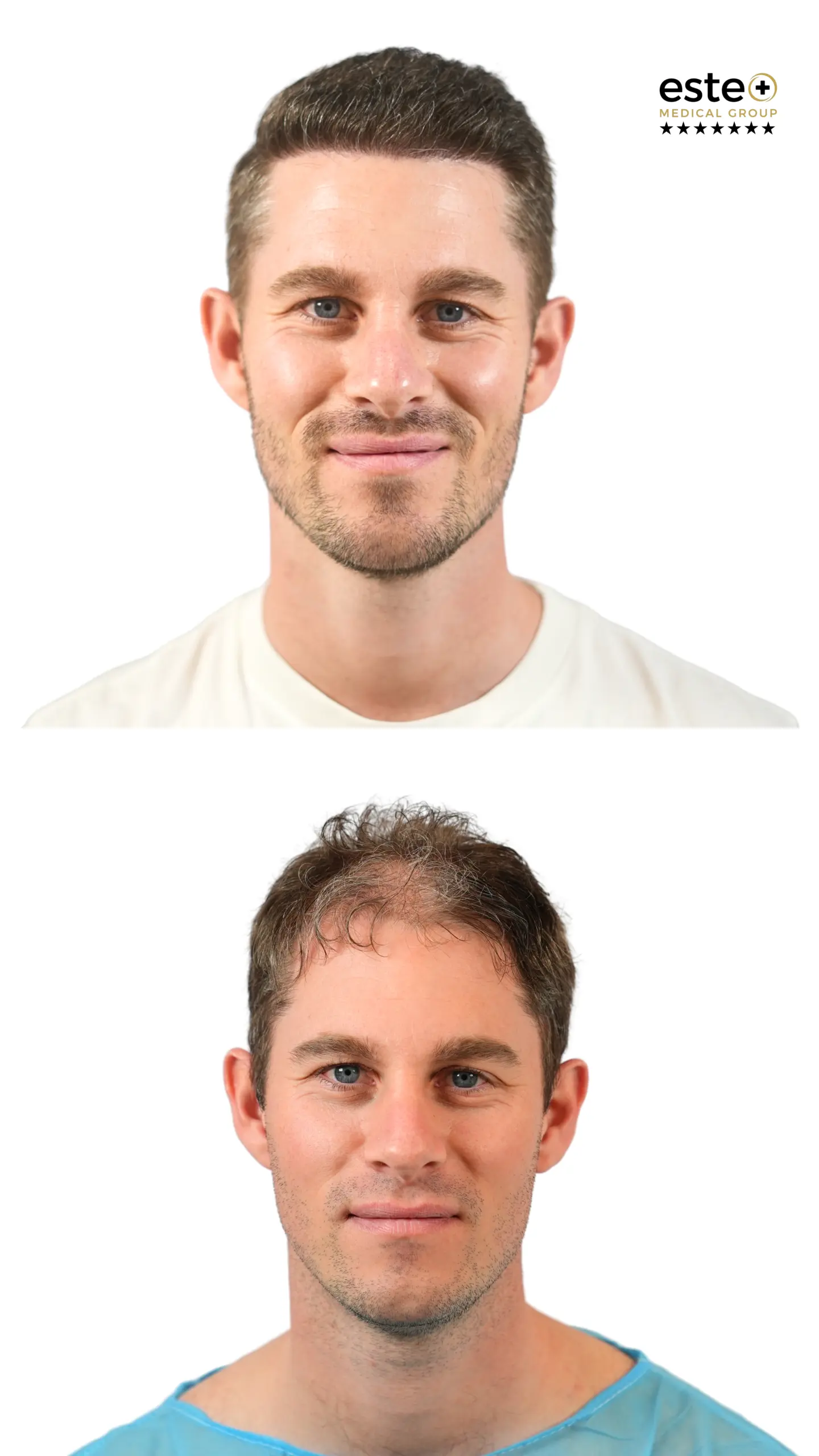
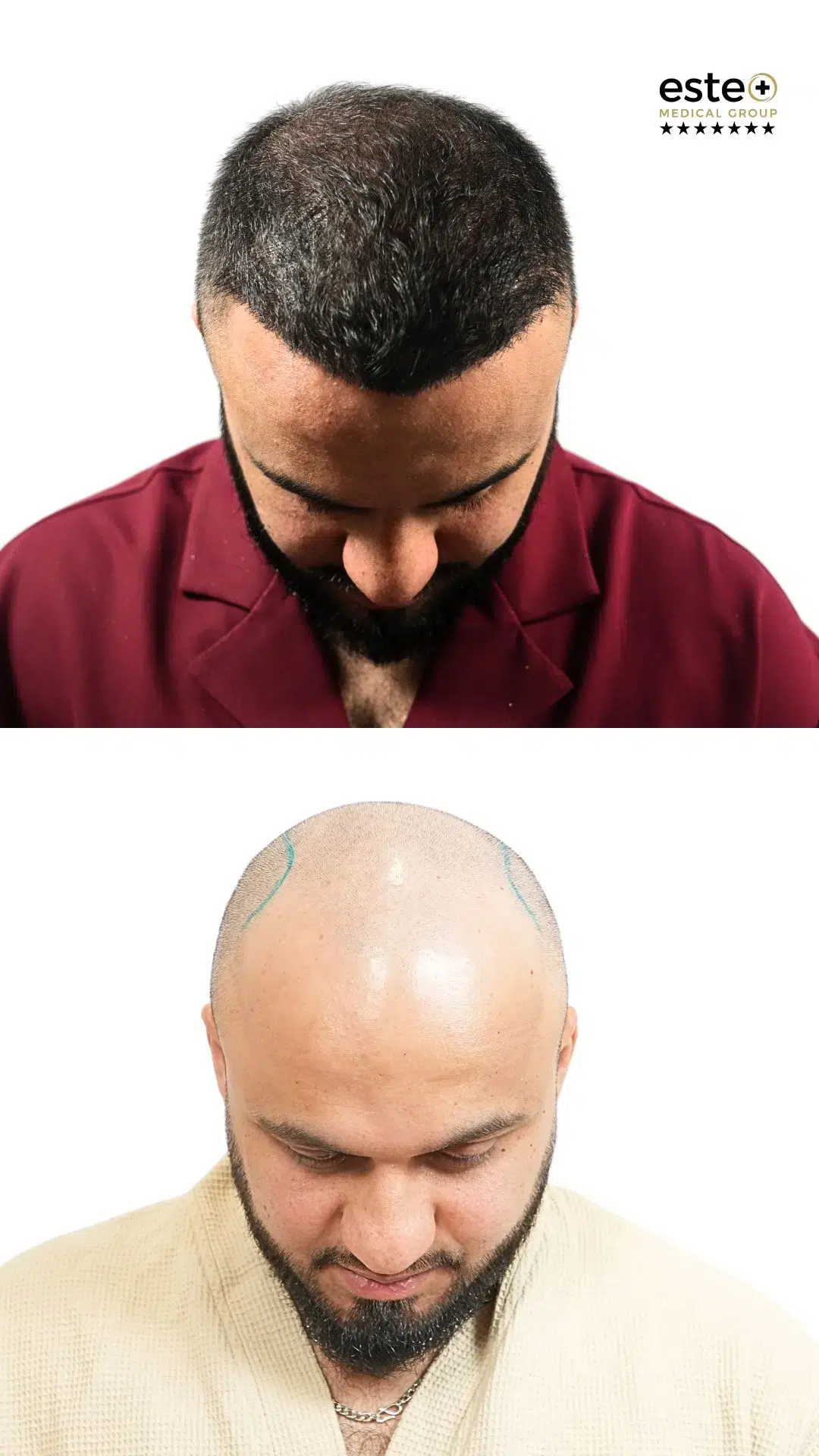
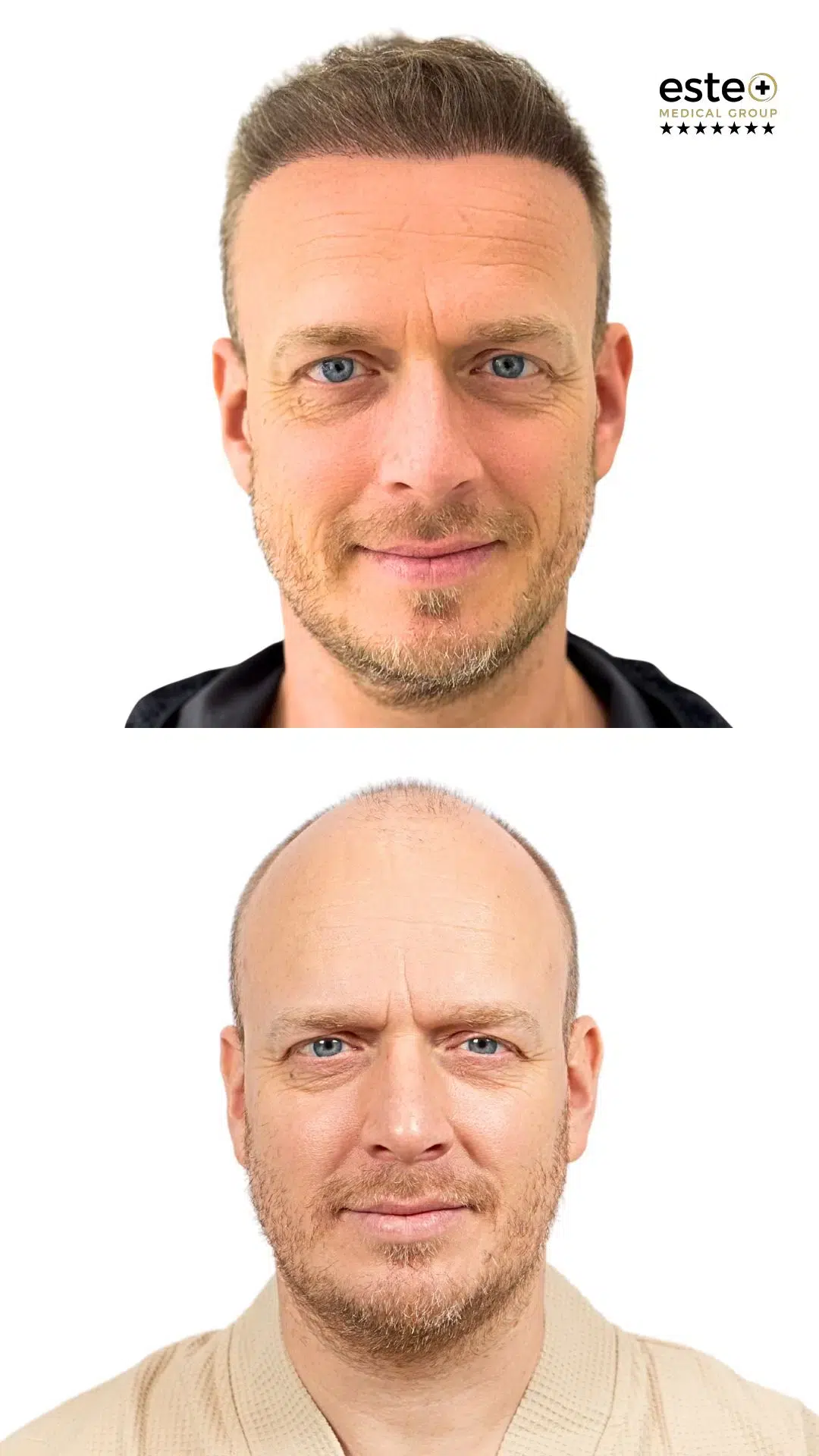
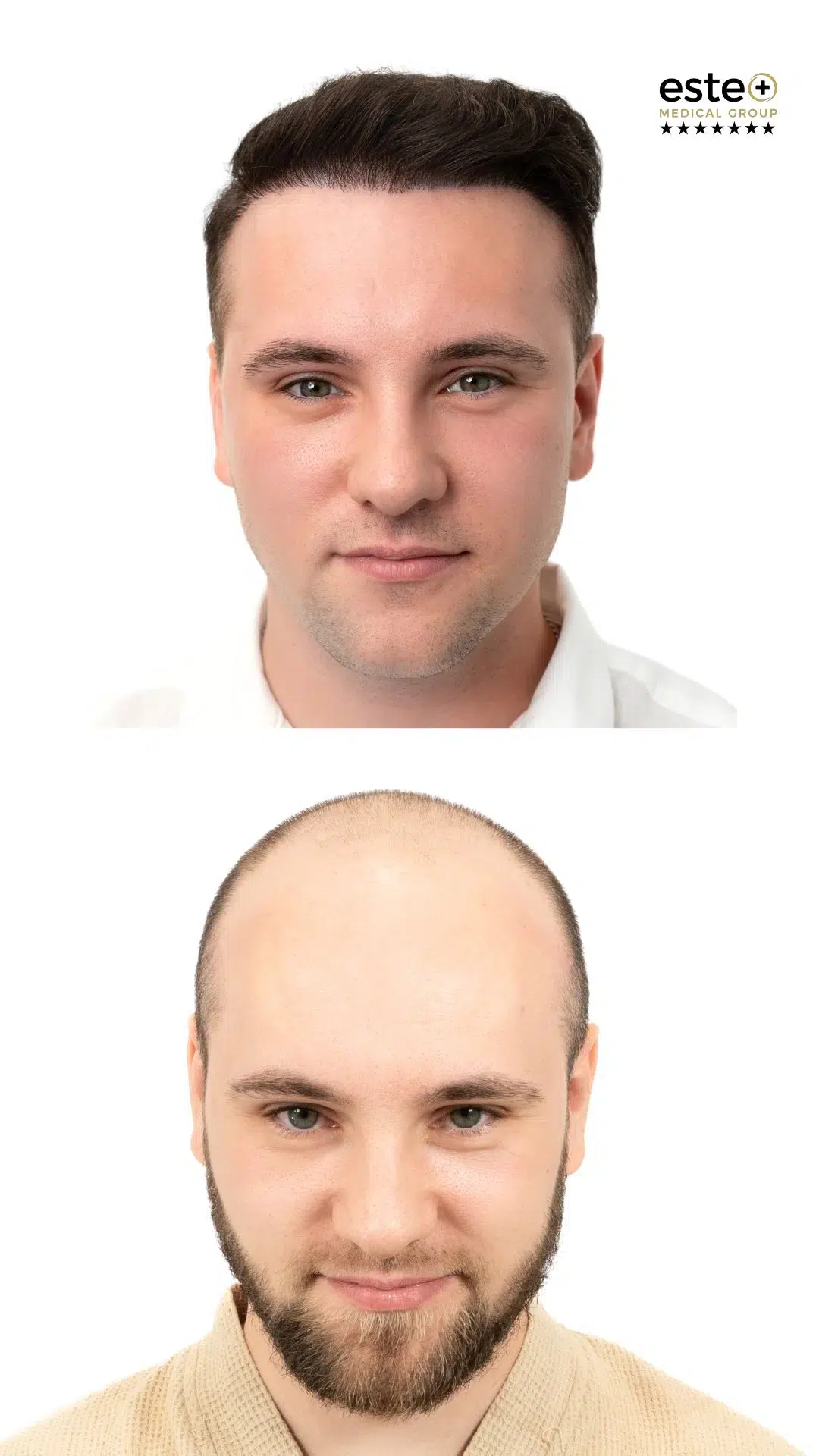
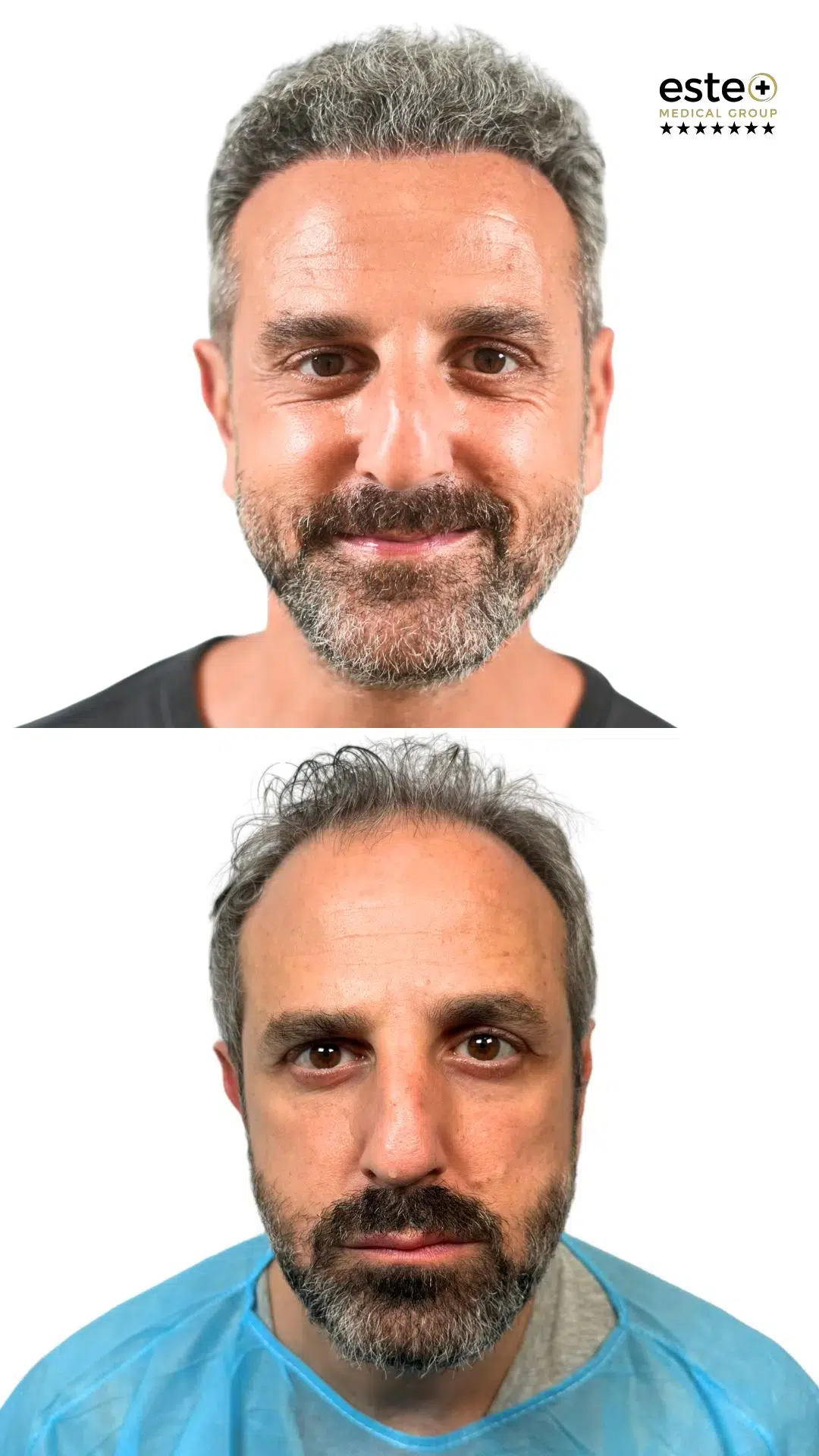
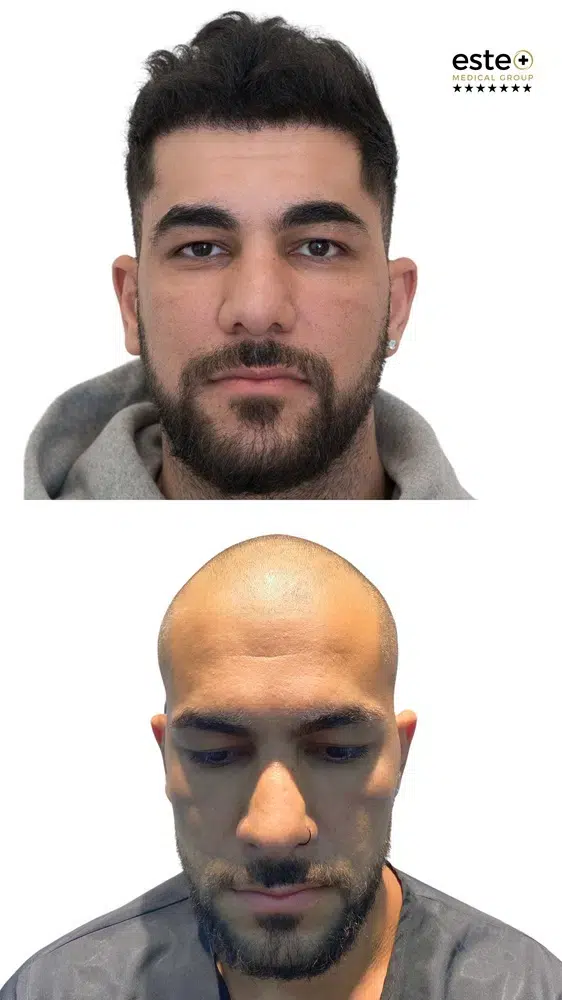
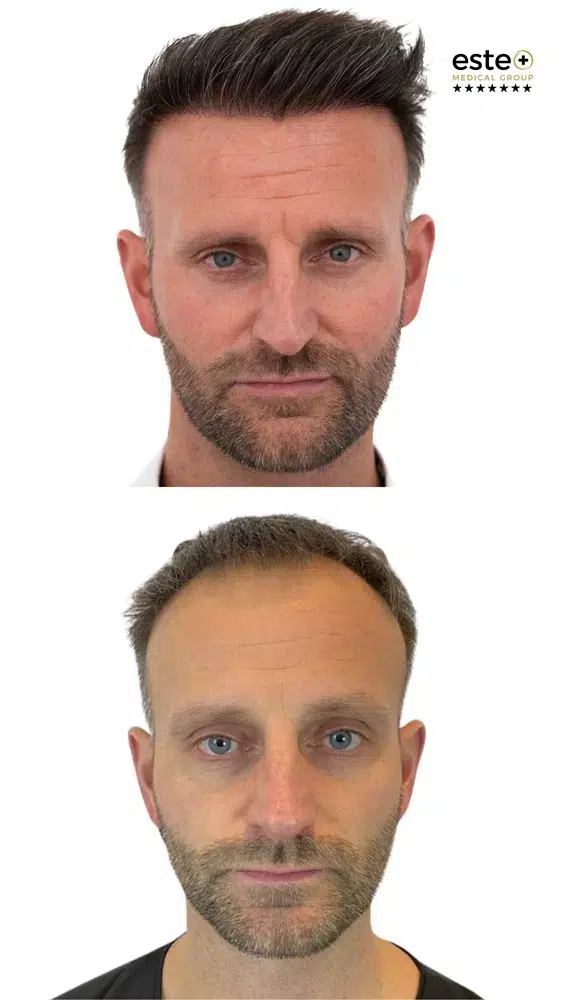
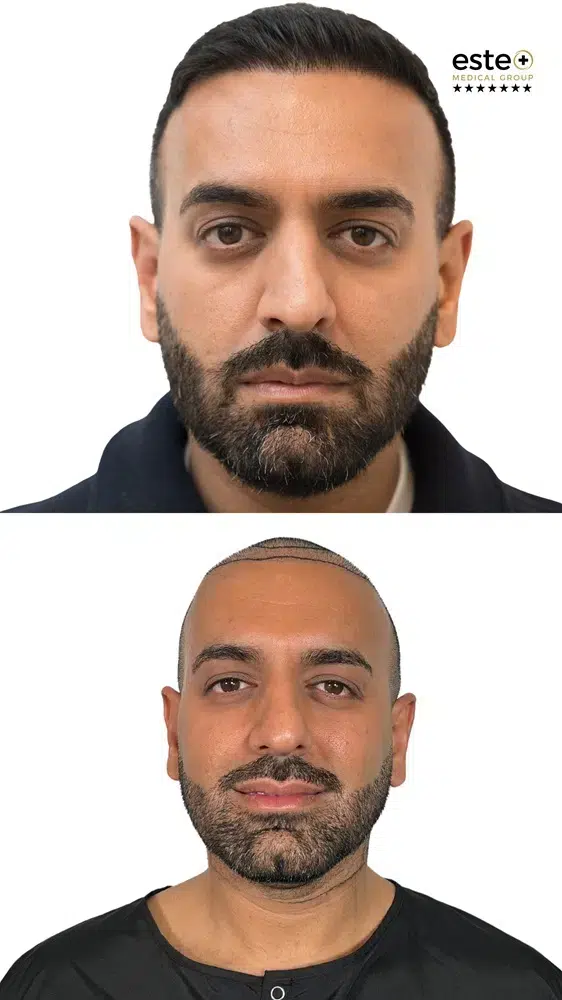
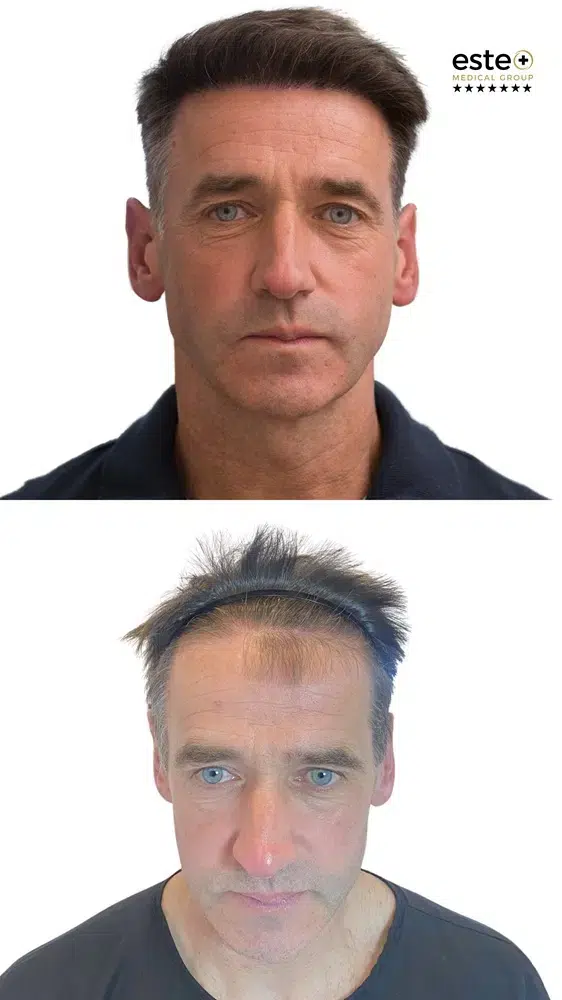
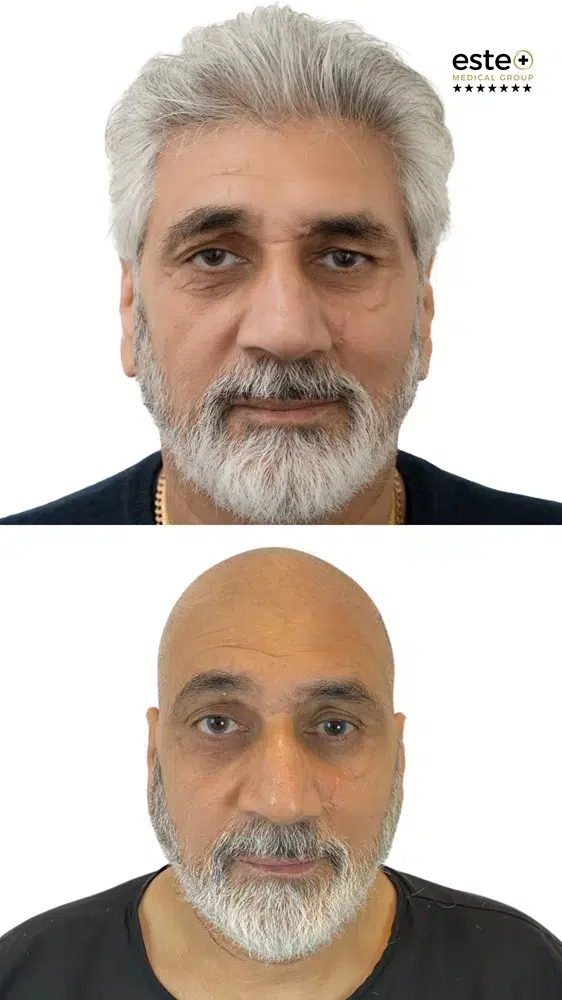
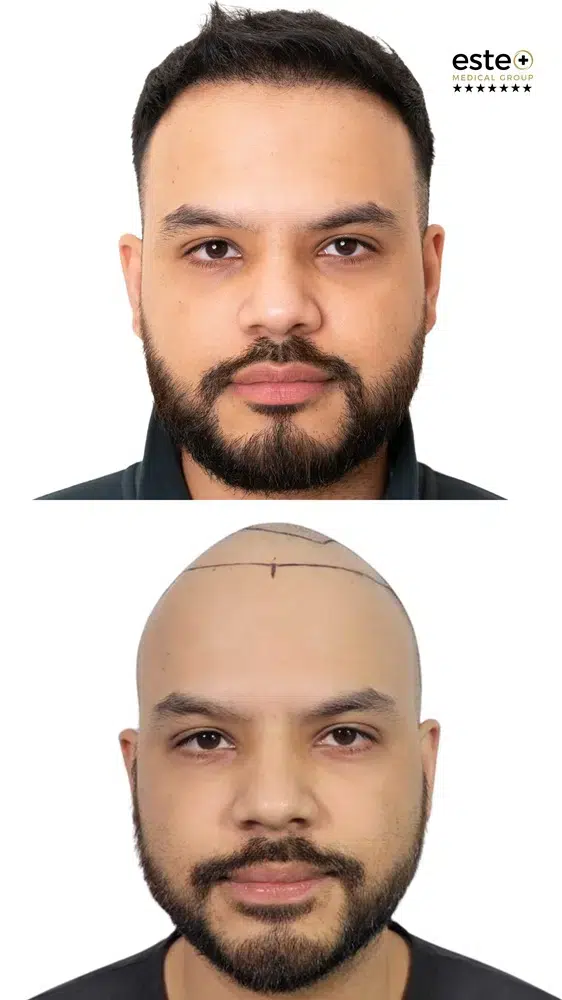
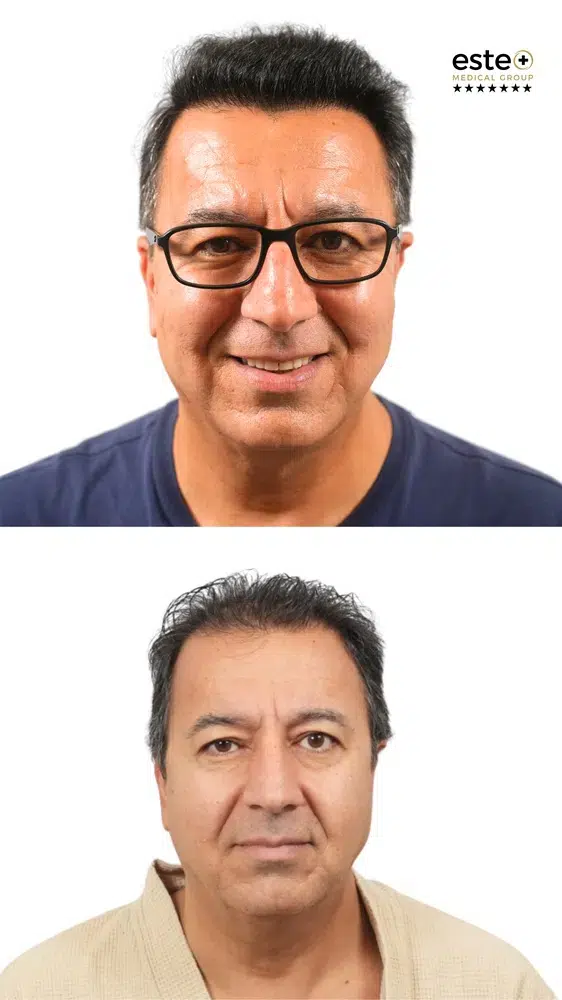
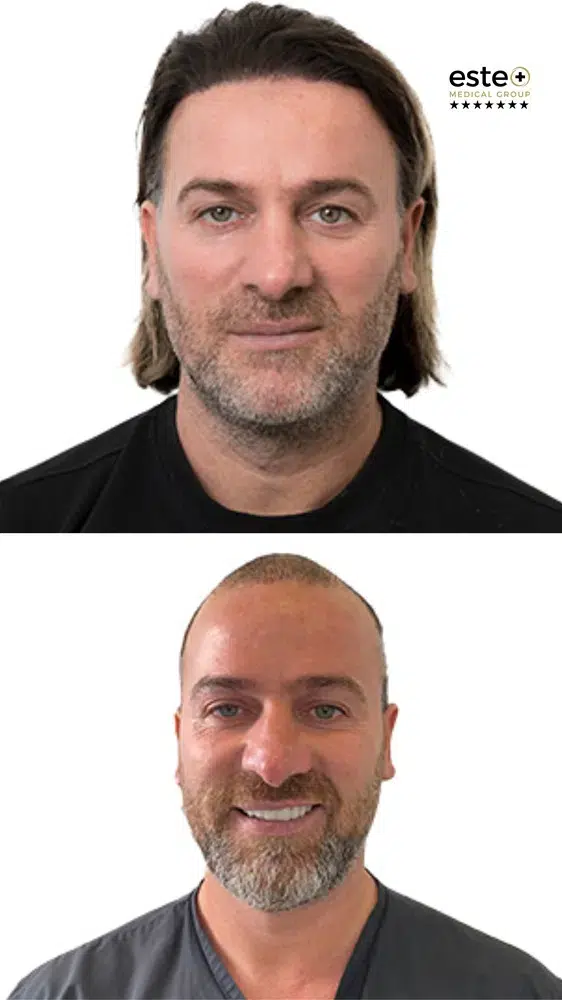
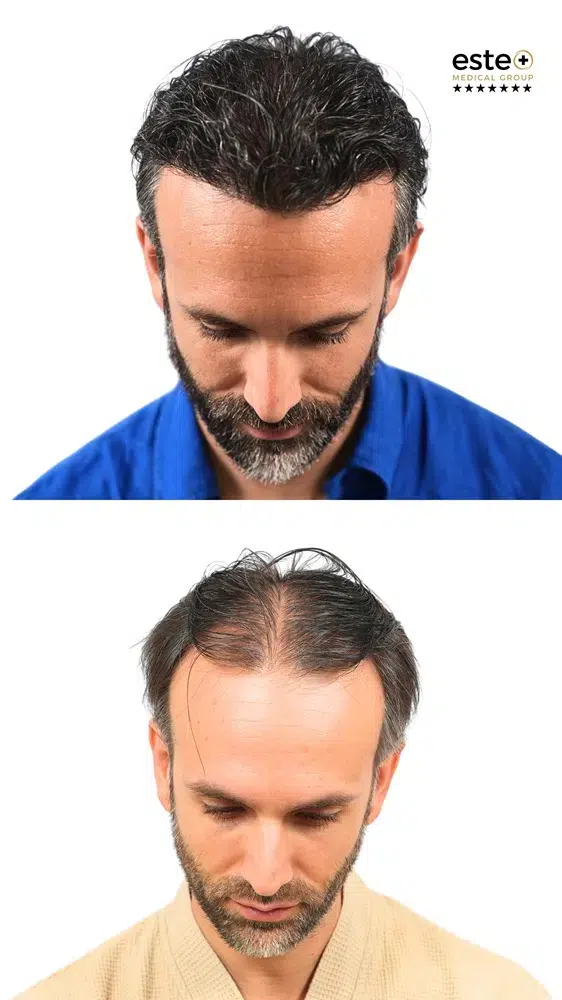
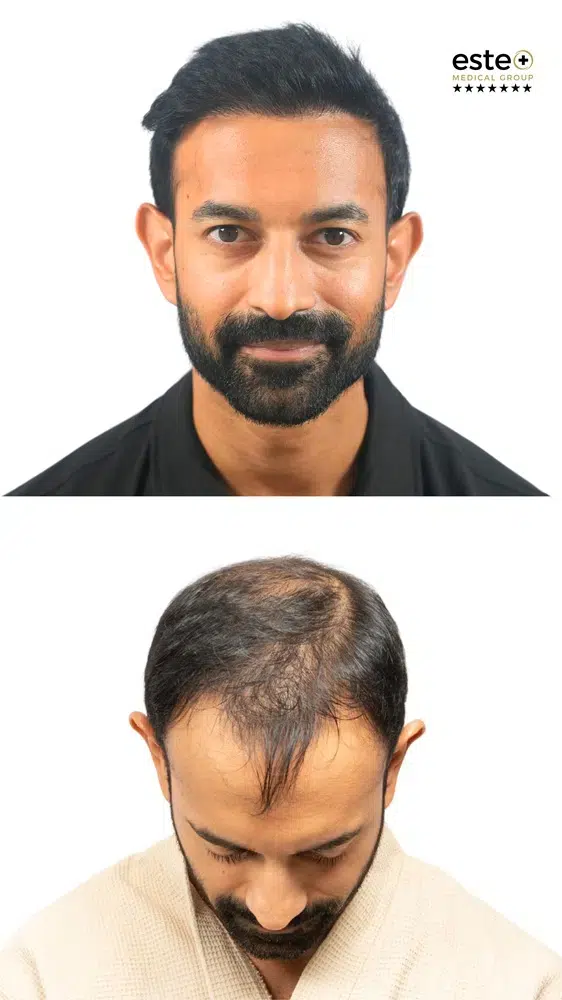
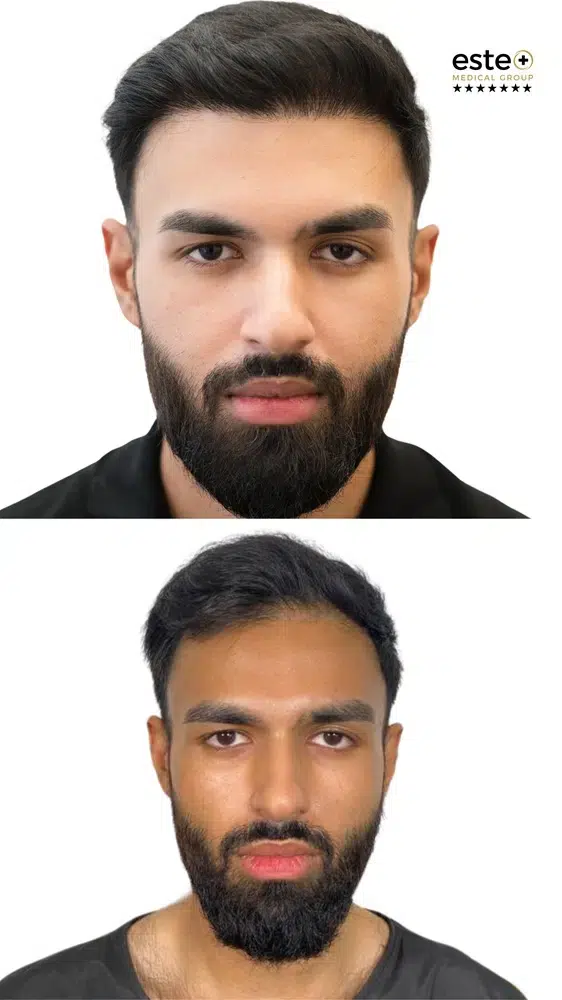
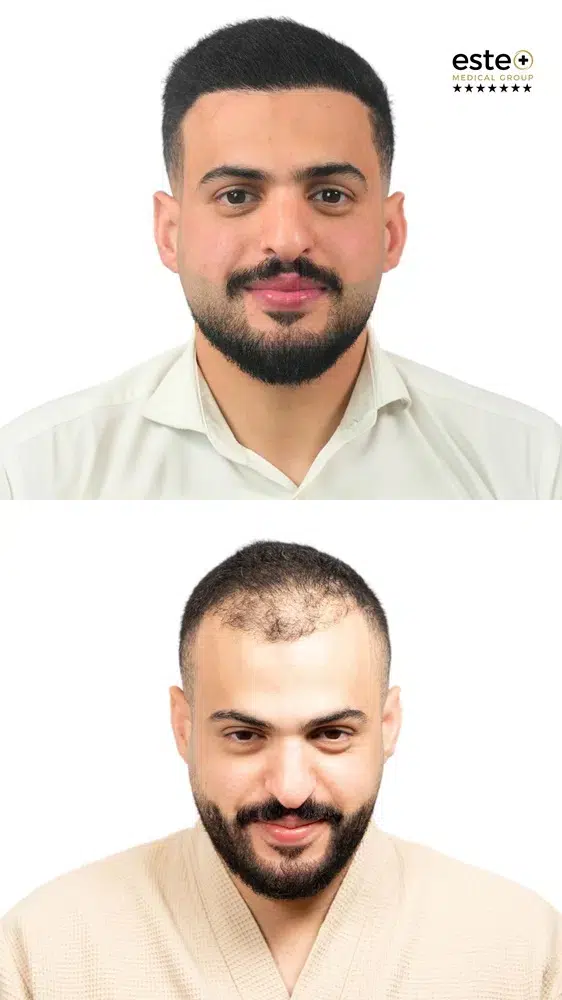
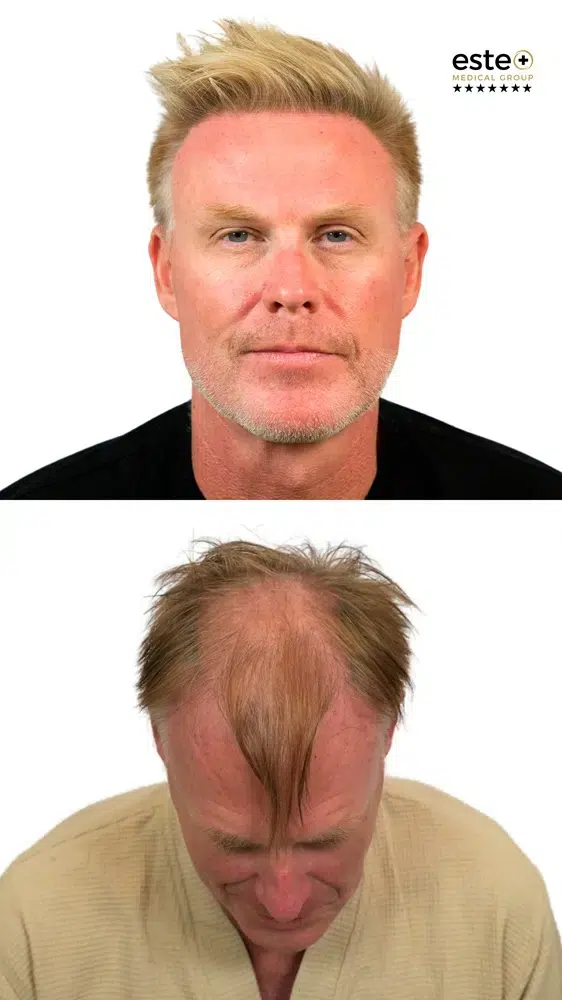
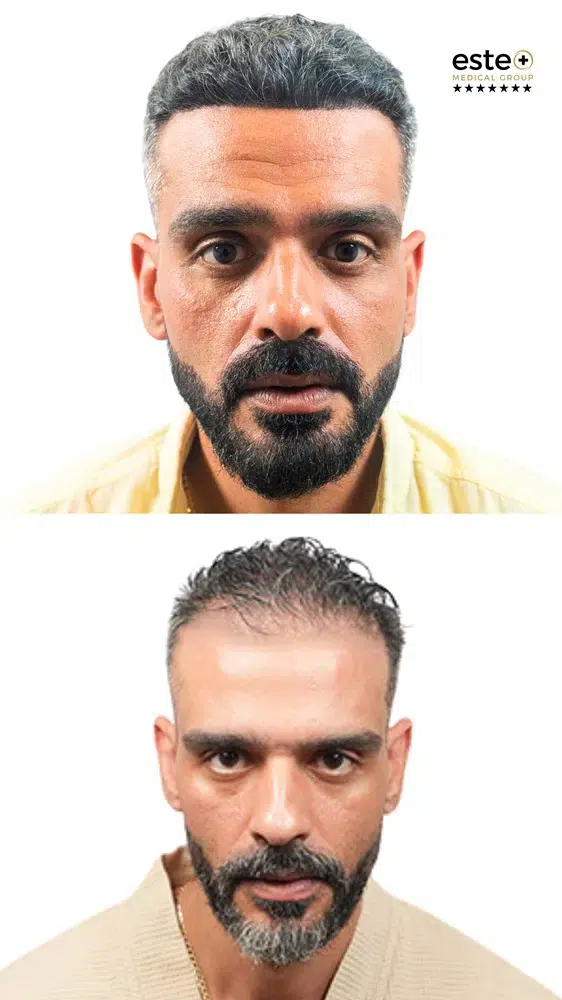
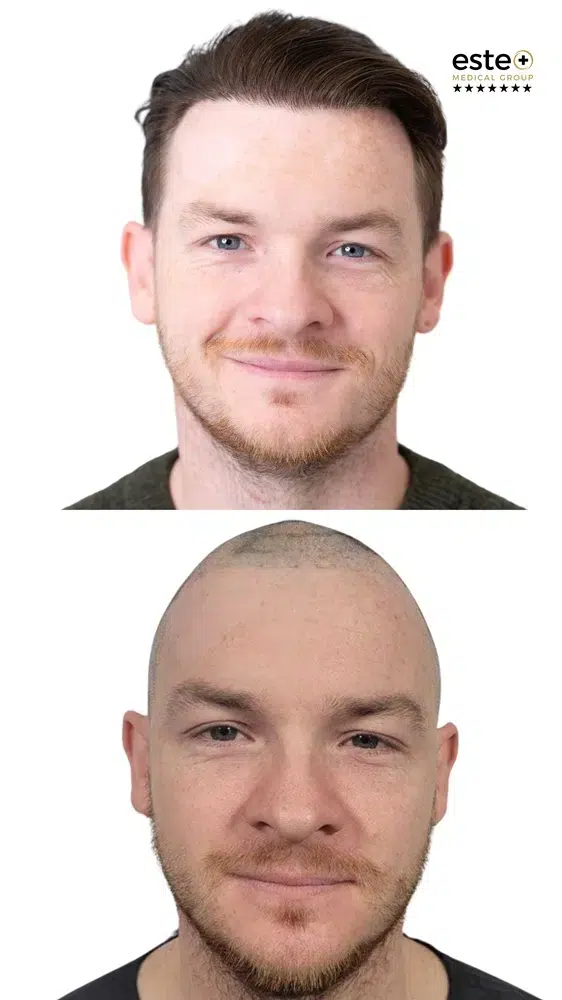
Real Hair Transplant Results
Our UK clinics have treated thousands of patients at varying stages of hair loss.
Results vary depending on:
- Donor quality
- Hair characteristics
- Density implanted
- Individual healing response



How Much Does a Hair Transplant Cost in the UK?
Hair transplant cost in the UK depends on several factors, including the number of grafts required, donor area strength, the area being restored, hairline complexity, treatment technique and whether the case involves scalp, beard or eyebrow restoration.
At Este Medical Group, every quote is personalised after consultation because no two hair restoration plans are the same. Your consultation includes an assessment of your hair loss pattern, donor area, medical suitability, expected graft requirement and realistic outcome.
We recommend avoiding clinics that quote based only on photographs or offer unrealistic fixed-price promises without properly assessing donor area quality and long-term planning.
Trusted by Thousands of Patients
Este Medical Group has accumulated thousands of independent reviews on Trustpilot across our UK clinics.
Patients frequently highlight:
- Professional consultation experience
- Clear communication
- Natural-looking results
- Structured aftercare support
Transparency and patient satisfaction remain central to our reputation.
DHI vs FUE vs FUT hair transplant
| Technique | How it works | Key point |
|---|---|---|
| DHI | Follicles are implanted directly using a specialist implanter tool | Allows precise control of angle, depth and direction |
| FUE | Follicles are extracted individually and implanted into prepared channels | Common modern hair transplant technique |
| FUT | A strip of scalp is removed and dissected into grafts | Can leave a linear scar and is less commonly preferred by some patients |
Hair Transplant Clinics Across the UK
We operate 13 clinics nationwide, including:
FAQ's
Is a hair transplant permanent?
Transplanted follicles are taken from donor areas that are usually more resistant to pattern hair loss. Once established, these hairs are designed to grow long term. However, surrounding non-transplanted hair can continue to thin, which is why long-term planning is important.
Who performs the hair transplant?
Hair transplant planning and clinical oversight are led by GMC-registered hair transplant surgeons, including Dr. Ileana Lizzeth Jimenez Andrade, GMC Number 7764470, and Dr. Ilknur Nihal Ardic, GMC Number 7996656.
Is a hair transplant painful?
How long does recovery take?
Can women have a hair transplant?
How do I choose the best hair transplant clinic in the UK?
Look for surgeon-led planning, GMC-registered doctors, clear aftercare, realistic graft planning, transparent suitability checks, patient results, clinic governance and honest advice about what can and cannot be achieved.