

Time off work, someone to collect you afterwards: the planning around a hair transplant usually starts with one practical question. How long is this going to take?
There are really two answers, and they run on very different clocks. The procedure itself is measured in hours, while recovery and results are measured in weeks and months. Most of the confusion around DHI hair transplant duration comes from people mixing the two up, so it’s worth taking them one at a time.
What Is a DHI Hair Transplant?
DHI is a hair transplant technique where individual follicles are extracted from the donor area and implanted directly into the treatment area using an implanter. The follicles are placed according to the planned angle and direction of growth to create the intended coverage.
How Long Does a DHI Hair Transplant Take in Birmingham?
The length of a DHI hair transplant depends mainly on how many grafts are being placed. A smaller area can take a few hours, while a larger session can run to most of a day, often with breaks. Your clinic should give you a time estimate once your graft number has been worked out at assessment.
What Happens During a DHI Hair Transplant?
If you’d like a fuller explanation of the technique itself, our guide to DHI hair transplant options in Manchester covers how DHI works. Here’s how the day usually runs:
Planning and hairline design. The clinician confirms the treatment area and marks out the hairline, and you agree it before anything starts.
Preparing the donor area. The area is prepared and numbed with a local anaesthetic.
Extracting the grafts. Follicles are removed from the donor area one at a time.
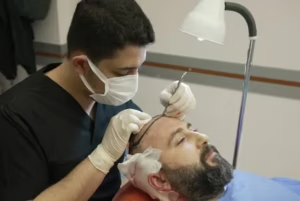
Implanting the follicles. Each follicle is placed directly into the treatment area with an implanter, in the direction and angle planned.
Aftercare briefing. You’re given instructions for the first days and a way to contact the team.
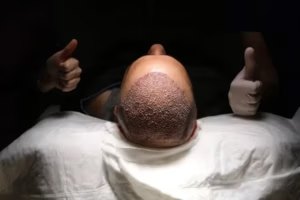
Most people are awake throughout, and breaks are normal in longer sessions.
What Can Make a DHI Procedure Take Longer?
A few things can affect DHI hair transplant duration, and most of them are decided at your assessment rather than on the day:
Number of grafts. This is the biggest factor, because every follicle is handled individually.
Size of the treatment area. Covering a hairline alone is a different job from treating the hairline and crown together.
Density you’re aiming for. A fuller result generally means more grafts placed.
Hair characteristics. Hair type and the condition of the donor area can affect how smoothly and quickly the work goes.
Breaks. Longer sessions are usually split up so you can rest and eat.
Be cautious of a clinic that gives you a firm timetable before it’s looked at your scalp. A time estimate only means something once your plan exists.
What Is the Recovery Time After a DHI Hair Transplant?
Recovery is gradual, and the timings below are general. Your clinic’s own aftercare advice always takes priority.
The First Few Days
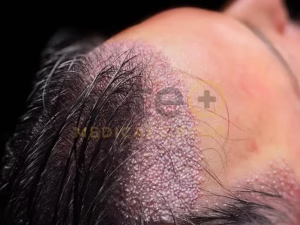
Redness, mild swelling and small scabs around the treated area are common. Your clinic will tell you how to wash, how to sleep and what to avoid. This is the period when the new grafts are most delicate, so follow the instructions closely.
The First Few Weeks
Scabs generally clear within a couple of weeks. Many people feel comfortable returning to desk work within a few days to about a week, depending on how visible the treated area is and how they feel. Transplanted hairs usually shed somewhere around weeks two to six. That’s a normal part of the cycle, not the transplant failing.
When Growth Starts
New growth typically begins after a few months and builds gradually. A full result often takes around a year or more to appear. It’s worth planning around that longer timeline rather than the first few weeks, because the early stage can look worse before it looks better.
Does DHI Give Natural-Looking Hair Transplant Results?
It can, but no technique guarantees it. A natural result comes from how well the hairline is designed, how each follicle is angled to match your existing growth and how density is spread across the area. Your own hair type and donor supply play a part too. Ask to see results from patients with hair like yours, and ask how the hairline is planned and agreed before treatment begins.
Can I Have a DHI Hair Transplant in Birmingham?
Yes. Este Medical Group carries out hair transplant procedures, including Robotic DHI, at Este Surgery, our CQC-registered surgical clinic at 7-9 Portland Road, Edgbaston, Birmingham. Patients from our other UK clinics travel here for the procedure itself, then continue their aftercare locally.
To see what’s available for Birmingham patients and how to arrange an assessment, start with our Birmingham hair transplant page. The assessment is also where you’ll get a time estimate based on your own treatment plan, and where you can ask how many days to set aside.
Questions to Ask Before Booking
These focus on time and recovery:
- How long should I expect my own session to take, and will there be breaks?
- How many days should I plan to be away from work?
- What will I need to avoid in the first weeks, and for how long?
- When should I expect shedding, and when should new growth start?
- Who do I contact if something worries me after I get home?
FAQs About DHI Hair Transplant Time and Recovery
Do I need someone to take me home after a DHI transplant?
It’s usually a good idea. Treatment can be long, you may feel tired afterwards and your clinic will advise on how to protect the treated area on the journey home. Ask your clinic about its own guidance when you book, so you can arrange a lift in advance.
Will I be awake during a DHI hair transplant?
Generally, yes. A local anaesthetic numbs the areas being treated, so you’re awake but shouldn’t feel pain. Many clinics let you listen to music or watch something during longer sessions. Ask how the clinic manages comfort and breaks, and what happens if the anaesthetic wears off.
When can I return to work after a DHI transplant?
It depends on your job and how visible the treated area is. Many people go back to desk work within a few days to about a week, but redness and scabbing can show for longer. Ask your clinic for a realistic estimate based on your plan, and allow extra if your job is physical.
Why does transplanted hair fall out after the procedure?
Shedding is a normal part of the process. After a transplant, the new hairs usually fall out as the follicles enter a resting phase, then regrow over the following months. It tends to appear a few weeks in. If you’re unsure whether what you’re seeing is normal, contact your clinic.
How should I wash my hair after a DHI transplant?
Follow your clinic’s instructions exactly. The grafts are delicate in the first days, so washing is usually gentle, with no rubbing or scratching, and the routine changes as healing progresses. Your clinic should give you a written schedule. If anything isn’t clear, ask before you leave.