
Every clinic will tell you its approach is the right one. That’s fine until you’re the person choosing, with three tabs open and no way to tell whose explanation actually holds up.
Here’s a way through it. Instead of comparing clinics on their marketing, compare them on two things that are surprisingly revealing: how they talk about hair transplant techniques, and how they talk about recovery. The recovery conversation often tells you more about a clinic than the technique conversation does, because it’s much harder to spin.
How Do I Compare Hair Transplant Clinics in Edinburgh?
Compare the hair transplant techniques each clinic offers and how it decides which one suits you, then look at what it says about recovery. A good clinic explains why a technique fits your hair loss, gives realistic timelines for results and tells you what support you’ll have afterwards. Pricing and credentials matter too, but start there.
Hair Transplant Techniques You’ll Come Across
You’ll mostly meet a small group of techniques, and the names can blur together. Here’s a plain comparison:
| Technique | How it works | What to ask |
|---|---|---|
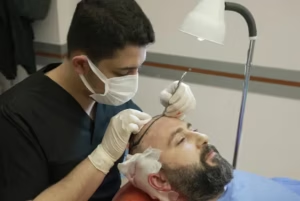
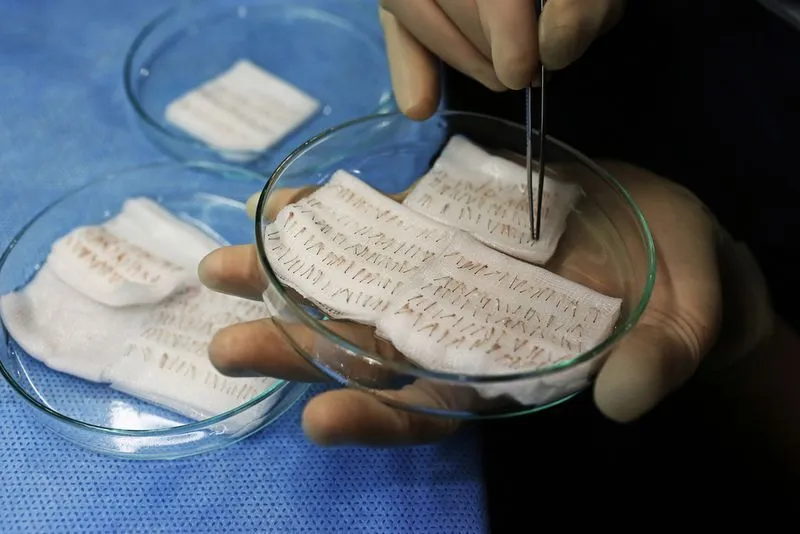
| FUE (follicular unit extraction) | Follicles are taken from the donor area one at a time and placed in small channels made in the treatment area | Why is this right for my hair loss? |
| DHI (Direct Hair Implantation) | Follicles are extracted one at a time and placed directly into the scalp with an implanter, without making channels first | What does DHI offer in my case, and what are its limits? |
| Robotic-assisted treatment | Robotic technology helps with certain steps, often extraction, while clinicians plan and oversee the treatment | Which steps are robotic, and who supervises them? |
Some clinics also offer strip-based techniques, where a thin strip of scalp is taken from the donor area. Which approach fits depends on your hair, your donor supply and your goals, so no one technique is automatically best.
At Este Medical Group, we offer DHI and Robotic DHI. Edinburgh patients have their consultation and aftercare at our Edinburgh clinic on York Place, and the procedure itself is carried out at Este Surgery, our CQC-registered surgical clinic in Edgbaston, Birmingham. We also see hair transplant patients in Glasgow, Nottingham and Sheffield.
How Should a Clinic Choose a Technique for You?
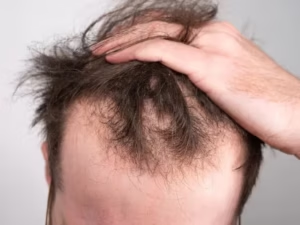
The decision should follow your assessment, not the other way round. A clinic that’s choosing well will look at your pattern of hair loss, the strength of your donor area, the size of the area being treated and what you want to achieve. Then it should explain its reasoning in plain language.
If you’ve been told which technique you’re having before anyone has examined your scalp, that’s worth questioning.
What Are the Recovery Expectations After a Hair Transplant in Edinburgh?
Recovery is where the differences between clinics really show. Whatever the technique, a clinic should be able to walk you through a realistic timeline. Here’s the general picture:
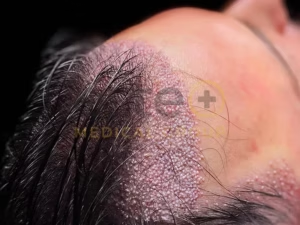
First few days. Redness, mild swelling and small scabs in the treated area. Your clinic will tell you how to wash, sleep and protect the area.
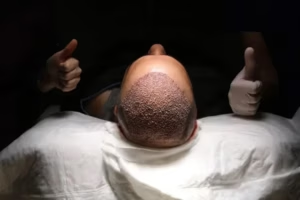
First few weeks. Scabs clear, and transplanted hairs usually shed. That’s a normal part of the cycle.
Hair growth. New growth typically starts after a few months, and full results often take around a year or more.
Techniques can differ in how the donor area heals, so ask what to expect there as well as in the treated area. Be cautious about anyone who promises a finished result in weeks. And ask what support you’ll have if recovery doesn’t go to plan, because that’s the question clinics are least prepared for.
How Do I Book a Hair Transplant Assessment in Edinburgh?
Booking is usually done online or by phone. It helps to have your hair loss history to hand, along with photos of your hair from a few years ago and a note of what you’d like to achieve. To see what Este Medical Group offers for Edinburgh patients and how to arrange an assessment, start with our Edinburgh hair transplant page.
If you’re also checking how a clinic is regulated, remember that rules differ between UK nations. In Scotland, independent clinics are overseen by Healthcare Improvement Scotland, while the Care Quality Commission covers England. Ask any clinic where the procedure itself will take place and which regulator covers that site. Our guide to choosing a hair transplant clinic covers how to check registrations.
Questions to Ask About Techniques and Recovery
- Which techniques do you offer, and are there any you wouldn’t recommend for me?
- How will my donor area look and heal?
- What should the treated area look like at different stages of recovery?
- What restrictions will I have in the early weeks?
- What support is there if my recovery doesn’t go to plan?
A clinic that answers these clearly, and doesn’t flinch at the last one, is usually one that’s thought about the whole process, not just the day of surgery.
FAQs About Hair Transplant Techniques and Recovery
Will a hair transplant leave scarring at the donor area?
It depends on the technique. Extraction methods that take follicles individually typically leave tiny marks that are usually hidden by surrounding hair, while strip-based methods leave a linear scar. How visible either is depends on your hair length and healing. Ask your clinic what to expect and to explain how the donor area is managed.
When can I exercise after a hair transplant?
Your clinic will give you a specific timeline, and it’s worth following it closely. In the early days, sweating, rubbing and knocks can disturb the new grafts, so strenuous activity is usually restricted for a period. The length of that period varies by clinic and treatment, so ask for it in writing.
Is there a best time of year to have a hair transplant?
There’s no universal best time, but it’s worth thinking about practicalities. A healing scalp needs protection from strong sun, and some people prefer a time of year when wearing a hat or covering up is easier. Ask your clinic for its advice, and plan around your work and social commitments.
How soon will people notice I’ve had a hair transplant?
For a short time, probably. Redness and small scabs in the treated area are visible in the first week or two, and the donor area may be trimmed. How noticeable that is depends on your technique and hair length. Ask the clinic how long visible signs usually last, so you can plan time off.
How do I know if my recovery is on track?
Some redness, scabbing and mild tenderness early on are normal, and shedding is expected after a few weeks. If you notice worsening pain, spreading redness, discharge or a high temperature, contact your clinic promptly. Your aftercare instructions should list what’s normal and when to call, so ask for them in writing.
Which Edinburgh clinics offer hair restoration?
Este Medical Group offers hair restoration for Edinburgh patients, including DHI and Robotic DHI. Your consultation and aftercare take place at our Edinburgh clinic, and the procedure is carried out at Este Surgery in Birmingham. A consultation can help you understand which treatment may be appropriate for your hair loss.