
Laser Tattoo Removal UK
Laser tattoo removal is a professional treatment designed to gradually fade or remove unwanted tattoo ink using targeted laser technology. At Este Medical Group, we provide personalised laser tattoo removal consultations across the UK for clients looking to remove an old tattoo, fade it for a cover-up, or reduce its visibility safely.
Every tattoo is unique. The number of sessions required, the results you may achieve, and how your skin responds all depend on factors such as ink colour, tattoo age, depth, placement and your skin type. That’s why every treatment at Este Medical Group starts with a detailed consultation and tailored treatment plan.
What Is Laser Tattoo Removal?
Laser tattoo removal uses focused pulses of light energy to break down tattoo pigment beneath the skin. These fragmented ink particles are then gradually removed by your body’s natural processes over time, causing the tattoo to fade with each session.
This treatment is commonly used to remove unwanted tattoos, fade tattoos before a cover-up, or reduce the appearance of older or poorly executed tattoo work.
How Does Laser Tattoo Removal Work?
During treatment, a laser device delivers controlled bursts of energy into the tattooed area. The laser specifically targets the pigment in the ink without cutting the skin. Over the following weeks, your body gradually clears the broken-down ink particles.
It is normal to experience temporary redness, warmth or mild swelling after treatment. Some tattoos may show a whitening effect immediately after the session, which settles quickly.
Who Is Laser Tattoo Removal Suitable For?
Laser tattoo removal may be suitable if you:
- Want to remove an unwanted tattoo
- Are preparing for a tattoo cover-up
- Have a tattoo that has faded unevenly over time
- Wish to remove cosmetic or semi-permanent tattoos
- Would like to reduce the visibility of tattoo ink
A consultation is important to determine suitability, especially for darker skin types or complex tattoos.
Larger tattoos, layered tattoos or those with dense ink may require more sessions.
Laser tattoo removal is a gradual process and usually requires a course of treatments. The number of sessions varies depending on the tattoo’s size, colour, depth and age, as well as your skin’s response to treatment.
Sessions are typically spaced several weeks apart to allow the skin to heal and the body to process the ink.
Clients often describe the sensation as similar to a quick snapping feeling against the skin. Discomfort levels vary depending on the area being treated and individual sensitivity. Where appropriate, cooling methods or numbing options may be used to improve comfort.
Laser Tattoo Removal for Different Skin Types
Laser tattoo removal can be performed on a range of skin types, but treatment settings and approach may vary. A professional assessment is important to minimise the risk of pigmentation changes and to ensure safe, effective treatment planning.
Laser Tattoo Removal Prices in the UK
The cost of laser tattoo removal depends on several factors, including the size of the tattoo, the number of colours used, the complexity of the design and how many sessions are required.
During your consultation, your practitioner will assess your tattoo and provide a personalised treatment plan with clear pricing based on your specific requirements.
Your Laser Tattoo Removal Journey at Este Medical Group
Your journey begins with a consultation, where we assess your tattoo and discuss your goals. We then create a personalised treatment plan based on your tattoo and skin type.
Each session is performed by trained practitioners using professional laser technology. After each session, you will receive aftercare guidance to support healing and optimise your results.
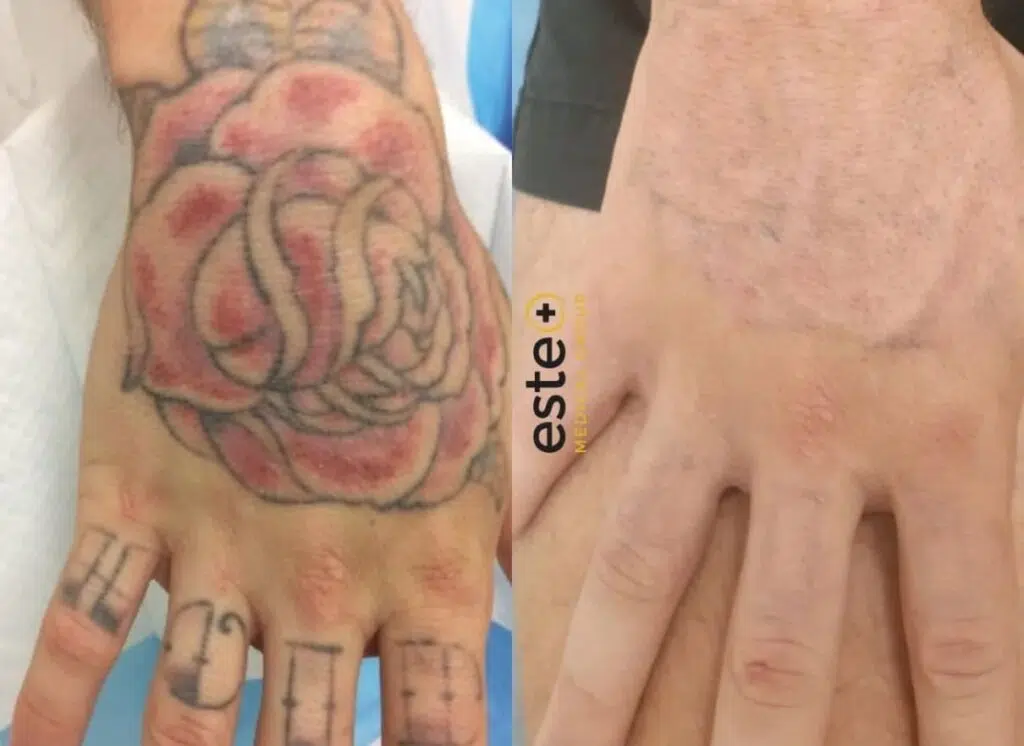
Before and After Laser Tattoo Removal Results
Results vary from person to person. Some tattoos fade significantly over time, while others may only partially lighten depending on ink composition and skin response.
Our practitioners will always provide realistic guidance on expected outcomes during your consultation.
Laser Tattoo Removal Aftercare
Aftercare plays an important role in your results and recovery. Following treatment, you may experience redness, swelling or sensitivity in the treated area.
- Keep the area clean and dry
- Avoid picking or scratching the skin
- Avoid sun exposure and use SPF once healed
- Avoid swimming, saunas and hot baths until the skin recovers
- Follow all aftercare instructions provided by your practitioner
Risks, Side Effects and Safety
Laser tattoo removal is generally safe when performed by trained professionals, but as with any cosmetic procedure, there are potential side effects.
These may include temporary redness, swelling, blistering or changes in skin pigmentation. Your practitioner will explain all risks and safety considerations during your consultation.
Why Choose Este Medical Group?
- UK-wide clinic group with multiple locations
- Personalised consultations and treatment plans
- Trained and experienced practitioners
- Focus on safe, gradual and realistic results
- Support for both full tattoo removal and cover-up fading
- Clear aftercare guidance and ongoing support
Frequently Asked Questions
How does laser tattoo removal work?
Laser tattoo removal works by breaking down tattoo ink into smaller particles using light energy, which are then gradually removed by the body.
How many sessions will I need?
The number of sessions varies depending on the tattoo, but most people require multiple treatments spaced over time.
Can a tattoo be completely removed?
Some tattoos can be significantly faded or fully removed, while others may only partially lighten depending on ink and skin factors.
Which tattoo colours are hardest to remove?
Lighter colours such as green, yellow and some bright pigments can be more difficult to remove than black ink.
Does laser tattoo removal hurt?
Most people experience mild to moderate discomfort, often described as a snapping sensation against the skin.
Is laser tattoo removal safe?
Yes, when performed by trained professionals using appropriate technology and protocols.
Can darker skin types have laser tattoo removal?
Yes, but treatment must be carefully tailored to reduce the risk of pigmentation changes.
Can I fade a tattoo for a cover-up?
Yes, many clients choose to fade an existing tattoo to prepare for a new design.
How long should I wait between sessions?
Sessions are usually spaced several weeks apart to allow healing and ink breakdown.
What should I avoid after treatment?
Scarring is uncommon when treatment and aftercare are followed correctly, but risks will be discussed during consultation.
Can laser tattoo removal leave scars?
Scarring is uncommon when treatment and aftercare are followed correctly, but risks will be discussed during consultation.
How much does laser tattoo removal cost in the UK?
Costs vary depending on tattoo size and complexity, and are confirmed during consultation.
Can cosmetic tattoos be removed?
Yes, eyebrow and other cosmetic tattoos can often be treated, depending on pigment type.