
Female Hair Transplant London – No-Shave Long Hair Robotic DHI Transplant
0% finance available on eligible treatments. Ask our London team during consultation.
Restore Your Hair Without Shaving Your Head
- No Shaving Required
- Free Consultation
- Robotic DHI Technique
- Personalised UK Aftercare
A female hair transplant no longer has to mean shaving your hair.
At Este Medical Group London, we offer a No-Shave Robotic DHI Hair Transplant for women who want to restore thinning areas while keeping their existing hairstyle.
Robotic and digital technology supports the assessment and planning of your transplant. The DHI technique is then used to implant each follicle directly into the treatment area with careful control over its position, direction, angle and distribution.
There is no need to shave the donor area or the area receiving the new follicles.
The treatment may help restore a thinning hairline, temples, parting or selected areas of permanent hair loss. Every procedure is planned around your natural hair, facial proportions and individual goals. Your journey starts with a free, private consultation at our London clinic.
FEMALE HAIR LOSS DESERVES A PERSONALISED APPROACH
Hair loss in women does not always follow one predictable pattern.
You may notice that your parting is becoming wider, your temples appear thinner or your hairline sits higher than you would like. Some women experience permanent loss after years of tight hairstyles, while others want to soften or reshape a naturally high hairline.
Whatever has brought you to Este Medical Group, your concerns will be assessed individually.
A female hair transplant is not simply a smaller version of a male procedure. Hairline shape, follicle direction, density, donor-hair availability and the possibility of future thinning must all be considered carefully.
Our No-Shave Robotic DHI approach allows your existing hair to remain in place while selected follicles are transplanted into the areas where greater coverage is required.
GMC-Registered Hair Transplant Surgeons at Este Medical Group
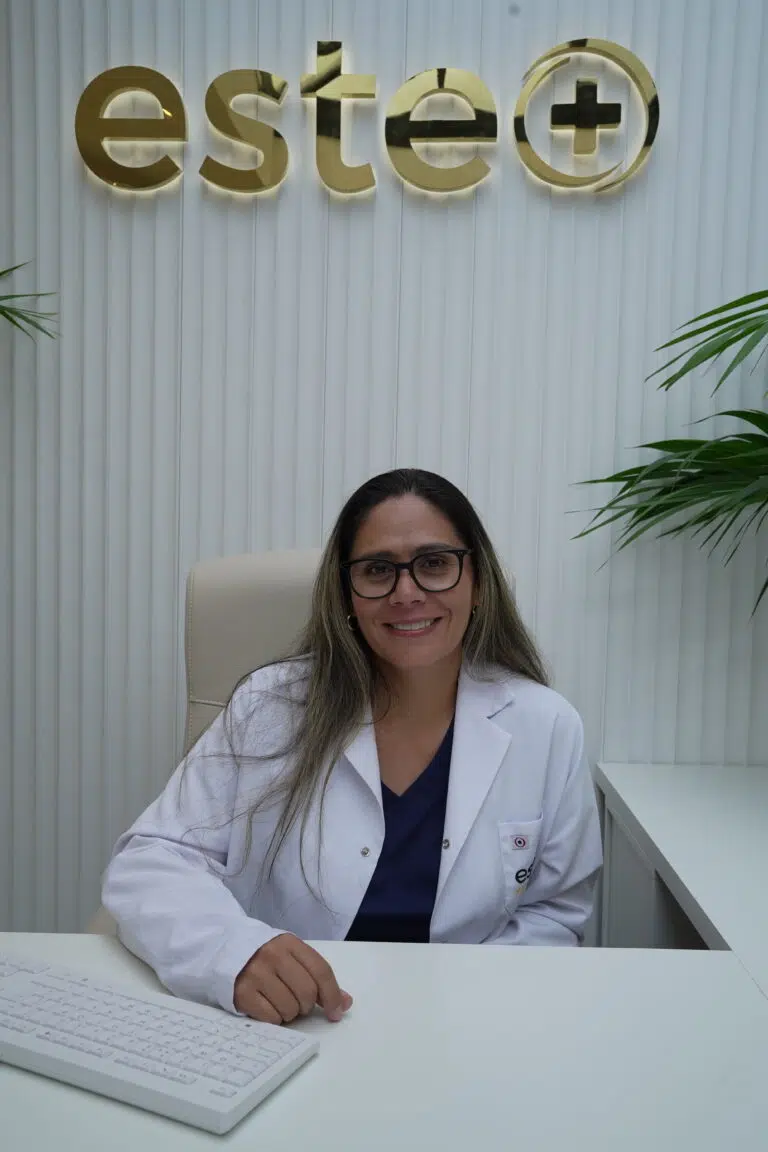
Dr. Ileana Lizzeth Jimenez Andrade
GMC Number: 7764470
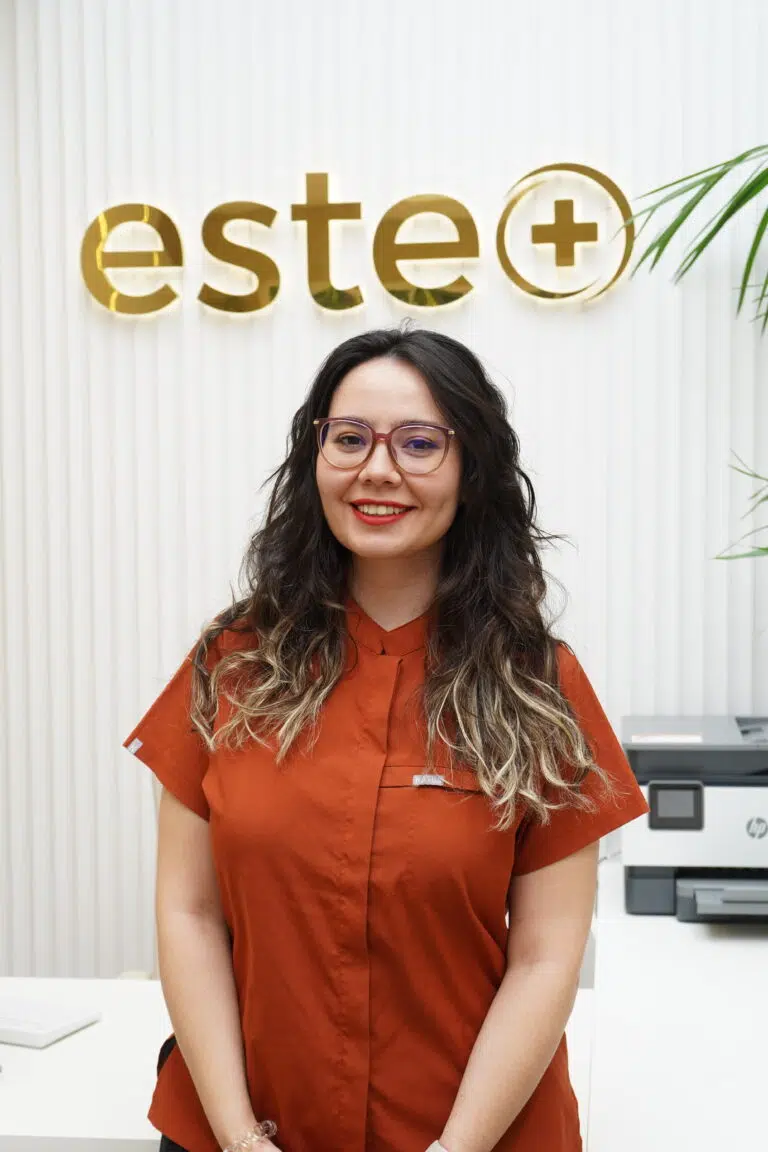
Dr. Ilknur Nihal Ardic
GMC Number: 7996656
WHAT IS A ROBOTIC DHI HAIR TRANSPLANT?
Robotic DHI Hair Transplant combines technology-supported assessment and planning with the direct implantation of individual hair follicles.
The robotic and digital technology assists the clinical team when examining the donor area and planning how the available grafts may be distributed across the areas being restored.
This planning stage can help the team assess:
- Donor-hair density
- Hair calibre and texture
- The size of the area being treated
- The approximate graft requirement
- The proposed hairline shape
- The distribution of density
- The relationship between transplanted and existing hair
Once the healthy follicles have been selected and extracted, they are implanted using the DHI technique.
DHI stands for Direct Hair Implantation. Each prepared follicular unit is placed into a specialised DHI implanter device and implanted directly into the treatment area.
This allows the transplant team to carefully control:
- The position of each follicle
- The direction of hair growth
- The angle of implantation
- The depth of placement
- The spacing between follicles
- The overall distribution of density
For female patients, this degree of control is especially important because the new follicles often need to be positioned carefully between existing hairs.
The robotic technology supports the assessment and planning process. The hair-transplant team remains responsible for clinical decisions, donor selection, extraction, implantation and patient care.
No technology or technique can guarantee a particular result. Outcomes depend on donor-hair quality, the cause of hair loss, graft survival, healing, aftercare and individual response.
A FEMALE HAIR TRANSPLANT WITH NO SHAVING REQUIRED
One of the biggest concerns women have about hair transplantation is the thought of shaving their hair.
With Este Medical Group’s No-Shave Robotic DHI procedure, there is no need to shave the donor area or the area receiving the new follicles.
Your existing hair remains at its normal length throughout the treatment. This helps preserve your usual appearance and makes the early signs of the procedure easier to conceal beneath the surrounding hair.
The Benefits of a No-Shave Robotic DHI Hair Transplant
- No shaving of the head
- No shaving of the donor area
- No shaving of the recipient area
- Keep your existing hairstyle
- A more discreet treatment experience
- Easier to conceal the early recovery stage
- Follicles can be placed between existing hairs
- Detailed robotic and digital treatment planning
- Individual follicle implantation
- Personalised female hairline design
- Careful control of follicle direction and angle
- Personalised treatment and aftercare
The fact that shaving is not required does not mean that every person experiencing hair loss will be suitable for surgery.
Your hair-loss pattern, donor area, scalp condition and medical history must still be assessed before treatment is recommended.
WHAT CAN A FEMALE HAIR TRANSPLANT HELP WITH?
A female hair transplant may be appropriate when follicles have been permanently lost and there is a healthy donor area from which suitable hairs can be taken.
Treatment may be considered for the following concerns.
A High Hairline
Some women naturally have a higher hairline or a larger forehead.
A carefully planned Robotic DHI transplant can add follicles along the front of the hairline to create a softer, more balanced shape.
The proposed position is planned around your facial proportions rather than following a standard template.
Receding or Thinning Temples
Loss around the temples can change how the hair frames the face.
Selected follicles may be implanted into this area to create softer coverage and restore the natural transition between the forehead and surrounding hair.
The angle and direction of temple hairs require careful planning because they naturally grow close to the skin.
A Widening Parting
Women with stable thinning along the parting may be suitable for transplantation where the donor region remains healthy.
The DHI technique allows follicles to be implanted carefully between existing hairs.
Because some forms of diffuse thinning can also affect the donor area, this concern requires careful assessment before surgery is considered.
Female-Pattern Hair Loss
Some women with a stable pattern of hair loss and a suitable donor supply may benefit from transplantation.
Your consultation will consider the extent of thinning, donor density, medical history and whether the existing hair may continue to change.
Traction Alopecia
Tight ponytails, braids, extensions and other styles that repeatedly pull on the follicles can cause traction alopecia.
Where the tension has stopped and the hair loss is permanent and stable, transplantation may be considered to restore selected areas.
Scars and Localised Hair Loss
A transplant may sometimes be used to improve hair coverage around a suitable scar or a defined area of permanent follicle loss.
Suitability depends on the condition, thickness and blood supply of the skin in the affected area.
Previous Hairline Correction
Women who are unhappy with the shape, direction or density of a previous hair transplant may be considered for corrective work where sufficient donor hair remains.
IS A HAIR TRANSPLANT RIGHT FOR EVERY TYPE OF FEMALE HAIR LOSS?
No. Hair transplantation is not the right starting point for every woman experiencing shedding or thinning.
Female hair loss can be associated with several factors, including:
- Hormonal changes
- Pregnancy
- Menopause
- Thyroid conditions
- Nutritional deficiencies
- Certain medications
- Physical or emotional stress
- Illness
- Autoimmune conditions
- Active scalp conditions
A transplant may not be recommended when:
- The hair loss is actively progressing
- The donor area is also thinning
- The cause of the hair loss has not been established
- There is active inflammation or scalp disease
- There is insufficient healthy donor hair
- The expected density cannot be achieved safely
- The hair loss may be temporary
- Another treatment or medical assessment would be more appropriate
- The proposed outcome would not meet realistic expectations
If a transplant does not appear suitable, the team can discuss other hair-restoration options or recommend that you obtain an appropriate medical assessment.
A free consultation is an opportunity to understand your choices. It does not commit you to having a procedure.
HOW DOES A NO-SHAVE ROBOTIC DHI HAIR TRANSPLANT WORK?
Every female hair transplant is planned individually.
The number of grafts, donor area, hairline design and implantation pattern are based on your hair-loss concern, existing hair and desired result.
Step 1: Free Hair and Scalp Consultation
Your journey starts with a free consultation at Este Medical Group London.
The team will discuss:
- The areas of hair loss or thinning that concern you
- How long you have noticed the changes
- Your medical and hair-loss history
- Any previous hair treatments
- Your current hairstyle and hair length
- What you would like the treatment to achieve
Your scalp and donor area will be assessed to determine whether a hair transplant is likely to be suitable.
Step 2: Robotic Donor-Area Assessment
Robotic and digital technology supports the assessment of the donor area.
This planning stage helps the clinical team examine the available follicular supply and consider how the grafts may be distributed across the treatment area.
The assessment considers:
- Donor-hair density
- Hair calibre
- Hair texture
- The condition of the donor area
- The size of the recipient area
- The approximate number of grafts required
- The position and shape of the proposed hairline
- The density that may be achieved safely
The robotic technology supports the team, but it does not replace the clinical judgement of the doctor or hair-transplant professionals involved.
Step 3: Personalised Female Hairline Design
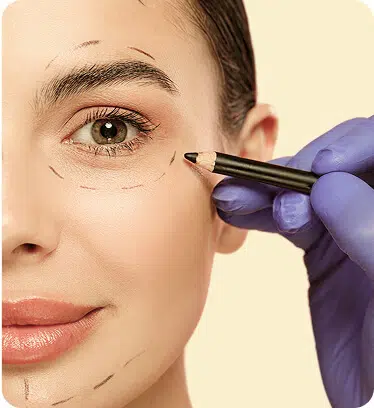
The proposed hairline or treatment area is mapped before the procedure.
Female hairlines are commonly softer and more curved than typical male hairlines.
The team considers:
- Forehead height
- Facial proportions
- Temple shape
- Existing hairline pattern
- Hair texture
- Natural growth direction
- Donor-hair availability
- The possibility of future thinning
The aim is to create a design that suits your individual features rather than applying one fixed hairline shape to every patient.
Step 4: No-Shave Follicle Extraction
Healthy follicular units are carefully selected and extracted from the donor area without shaving the surrounding hair.
Your existing donor hair remains at its normal length, helping the treated area remain discreet.
Each follicular unit may contain one or more hairs.
The follicles are handled carefully after extraction in preparation for implantation.
Step 5: Graft Assessment and Preparation
The extracted follicular units are assessed before implantation.
The team considers which grafts are most appropriate for different parts of the treatment area.
Finer single-hair grafts may be used near the front of the hairline to help create a softer transition.
Suitable multi-hair grafts may be positioned further behind to support the planned density.
Step 6: Direct Hair Implantation with a DHI Implanter
The prepared follicles are placed into a specialised DHI implanter device.
They are then implanted directly into the treatment area. The recipient hair does not need to be shaved.
The DHI implanter allows the team to position each follicle individually while controlling:
- Angle
- Direction
- Depth
- Spacing
- Distribution
This can be particularly useful when implanting follicles between existing hairs.
Step 7: Creating Natural Direction and Density
Hair does not grow in one uniform direction.
The angle and direction change across the hairline, temples and parting.
During implantation, the follicles are positioned to follow these natural changes as closely as possible.
The team also plans the spacing and distribution of the grafts so the transplanted hair can blend with the surrounding hair rather than appearing as a separate or artificial section.
Step 8: Aftercare and Follow-Up
After your Robotic DHI Hair Transplant, you will receive personalised aftercare instructions.
These will cover:
- How and when to wash your hair
- How to protect the implanted follicles
- Sleeping positions
- Exercise and physical activity
- Hair styling
- Temporary redness and scabbing
- Expected shedding
- The stages of new hair growth
- Follow-up support
The transplanted hairs commonly shed during the first few weeks.
New growth then develops gradually over the following months.
WHY CHOOSE ROBOTIC DHI FOR FEMALE HAIR RESTORATION?
- No Shaving Required: The donor and recipient hair remain at their normal length, allowing you to keep your existing hairstyle throughout the procedure.
- Technology-Supported Planning: Robotic and digital technology assists the team when assessing the donor area and planning the distribution of grafts.
- Direct Follicle Implantation: The follicles are implanted individually using a specialised DHI implanter device.
- Controlled Hair Direction: The angle and direction of each graft can be planned to help the new hair follow the natural growth pattern.
- Implantation Between Existing Hairs: The DHI technique allows follicles to be placed carefully between existing hairs without shaving the recipient area.
- Personalised Density Planning: The grafts are distributed according to the available donor supply, treatment area and density that may be achieved safely.
- Female-Focused Hairline Design: The position and shape of the restored area are planned around female facial proportions, temple shape and existing hairline characteristics.
ROBOTIC DHI FEMALE HAIR TRANSPLANT AT A GLANCE
| Item | Detail |
|---|---|
| Treatment | No-Shave Robotic DHI Hair Transplant for Women |
| Technique | Robotic planning support combined with Direct Hair Implantation |
| Robotic role | Supports donor-area assessment, treatment mapping and graft-distribution planning |
| Implantation method | Individual follicles implanted using a specialised DHI implanter device |
| Clinical responsibility | The hair-transplant team remains responsible for treatment decisions, extraction and implantation |
| Shaving | No shaving of the donor or recipient area |
| Hair length | Keep your existing hair at its normal length |
| Suitable concerns | Selected cases of permanent hairline recession, temple thinning, stable traction alopecia and localised hair loss |
| Consultation | Free consultation and suitability assessment |
| Hairline design | Personalised around female facial proportions and existing hair |
| Anaesthetic | Local anaesthetic |
| Procedure time | Depends on the treatment area, graft number and complexity |
| Early recovery | Temporary redness, swelling, tenderness and scabbing may occur |
| Visible healing | Commonly improves over approximately 7–14 days |
| Early growth | May begin to appear after several months |
| Developing results | More noticeable growth commonly develops over 6–12 months |
| Final maturation | Hair may continue to mature beyond 12 months |
| Aftercare | Personalised recovery guidance and follow-up support |
| London consultation clinic | 14–15 Child’s Place, London, SW5 9RX |
| Telephone | 020 4504 0780 |
FREQUENTLY ASKED QUESTIONS
What does Robotic DHI mean?
Robotic DHI combines technology-supported hair-transplant assessment and planning with the Direct Hair Implantation technique.
Robotic and digital technology assists the team when assessing the donor area and planning graft distribution.
The extracted follicles are then implanted individually using a specialised DHI implanter device.
Does a robot perform the whole hair transplant?
No.
Robotic technology supports the assessment and planning process.
The hair-transplant team remains responsible for clinical decisions, donor selection, extraction, hairline design, implantation and patient care.
What is Direct Hair Implantation?
Direct Hair Implantation, or DHI, is a technique in which prepared follicular units are placed into a specialised implanter device and inserted individually into the recipient area.
This allows the team to control the position, angle, direction, depth and distribution of each graft.
Can I have a female hair transplant without shaving my head?
Yes.
Este Medical Group’s No-Shave Robotic DHI Hair Transplant does not require the donor or recipient hair to be shaved.
Your existing hair can remain at its normal length throughout the treatment.
You will still need a consultation to confirm that transplantation is appropriate for your type of hair loss and donor area.
Will the back of my head be shaved?
No.
Follicles are individually selected and extracted from the donor region without shaving the surrounding hair.
Your existing hair remains in place, helping the donor area stay discreet.
Does the area receiving the new hair need to be shaved?
No.
The recipient area is not shaved.
The prepared follicles are carefully implanted between your existing hairs according to your personalised treatment plan.
Why is DHI suitable for women?
DHI may be helpful for female patients because the follicles can be implanted carefully between existing hairs.
This supports a no-shave approach and helps the transplanted follicles blend with the surrounding hair.
Is Robotic DHI the same as FUE?
FUE generally describes the extraction of individual follicular units from the donor area.
DHI describes the way the prepared follicles are implanted into the treatment area using a specialised implanter.
A procedure may involve individual follicular extraction followed by DHI implantation.
Is a no-shave transplant different from a fully shaved transplant?
The main difference is that the existing donor and recipient hair remains at its normal length.
Working between longer hairs requires careful selection, extraction and implantation.
The underlying purpose remains the same: transferring suitable follicles from a donor area to an area of permanent hair loss.
Can other people tell that I have had a hair transplant?
Keeping your existing hair can make the procedure easier to conceal than a fully shaved transplant.
However, temporary redness, swelling or small scabs may still be visible during the early recovery stage.
The level of visibility varies between patients.
Is a no-shave female hair transplant suitable for everyone?
The no-shave technique means the hair does not need to be shaved, but transplantation is not appropriate for every type of female hair loss.
Your donor density, scalp condition, medical history, hair-loss pattern and stability of hair loss must be assessed before treatment is recommended.
Can a female hair transplant lower a high hairline?
A transplant may be used to lower or reshape a naturally high hairline where there is sufficient donor hair and the proposed design is appropriate for your facial proportions.
Your hairline will be planned carefully to create a soft, natural-looking transition.
Can a hair transplant restore thinning temples?
Selected patients with stable temple recession or permanent temple thinning may be suitable.
Temple follicles grow at particularly fine angles, so careful direction and placement are important when restoring this area.
Can Robotic DHI improve a widening parting?
It may be appropriate for selected women with stable thinning and a suitable donor area.
Diffuse thinning requires careful assessment because the donor region may also be affected.
Can a transplant treat traction alopecia?
A transplant may be considered where traction has caused permanent and stable follicle loss.
The pulling or tension must have stopped, and any active inflammation should be addressed before transplantation is considered.
Can a hair transplant treat alopecia areata?
A transplant is not normally the first treatment for active alopecia areata.
Because the condition may recur and can affect transplanted follicles, further medical assessment may be required.
Is a female hair transplant painful?
Local anaesthetic is used to numb the donor and recipient areas.
You may feel some discomfort while the anaesthetic is administered.
Temporary tenderness, tightness or sensitivity can also occur during recovery.
How long does a Robotic DHI Hair Transplant take?
The treatment time depends on the area being restored, number of grafts and complexity of the procedure.
A more accurate estimate will be provided following your consultation and treatment planning.
How soon can I return to work?
This depends on the treatment area, your recovery, your occupation and how comfortable you feel with temporary redness or scabbing.
Some patients return to work after a few days, while others prefer to allow approximately one to two weeks for the most visible signs of healing to settle.
Can I wash and style my hair after treatment?
You will receive specific washing and aftercare instructions following the procedure.
The implanted follicles must be protected during the early healing stage.
Normal washing and styling can be reintroduced gradually according to the guidance provided by your treatment team.
Will the transplanted hair fall out?
The implanted hairs commonly shed during the first few weeks.
This is an expected stage of the transplant cycle.
The follicles remain beneath the skin and may begin producing new hair after a resting period.
When will I see new growth?
Early growth may begin to appear after several months.
A more noticeable improvement commonly develops between six and twelve months, with further thickening and maturation possible beyond 12 months.
Are the results permanent?
Transplanted follicles are selected from areas that are generally more resistant to pattern hair loss and are intended to provide lasting growth.
However, existing non-transplanted hair can continue to thin.
No clinic can guarantee that every graft will grow or that future hair loss will not occur.
Are there risks associated with a hair transplant?
Possible side effects and complications can include:
- Pain or tenderness
- Swelling
- Bleeding
- Infection
- Itching
- Temporary numbness
- Scarring
- Folliculitis
- Temporary shock loss
- Poor graft growth
- Uneven density
- An unsatisfactory hairline or result
Your individual risks, alternatives and expected outcome will be discussed before you decide whether to proceed.
How much does a female hair transplant cost in London?
The price depends on the treatment area, number of grafts and complexity of the individual procedure.
Following your free consultation and assessment, you will receive a personalised treatment plan and quotation before making a decision.
Is the consultation free?
Yes.
Este Medical Group offers a free initial female hair-transplant consultation.
The consultation allows you to discuss your concerns and find out whether a Robotic DHI transplant or another hair-loss treatment may be appropriate.
Where is the Este Medical Group London clinic?
The clinic is located at:
Este Medical Group
14–15 Child’s Place
London
SW5 9RX
Call 020 4504 0780 to arrange your free consultation.