
Este Medical Group

Mayyas

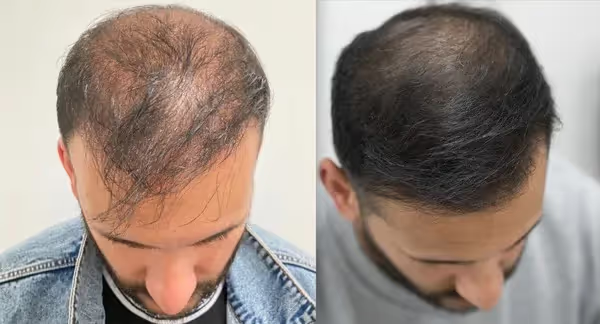
Irfan’s Laser Hair Growth Treatment Before-And-After Photos

Irfan’s Laser Hair Growth Treatment Before-And-After Photos

Our Este hair loss client Irfan was recommended to us by his cousin. Irfan was experiencing hair loss all over his head, especially at the crown and at the front of his head.He wasn’t sure what kind of hair growth treatment he needed, so he booked an Este Medical hair loss consultation. After Irfan’s hair loss consultation a customised laser hair regrowth treatment plan was recommended to restore his hair growth. Laser hair therapy is a safe, non-invasive and clinically proven treatment for stimulating hair follicles to grow fuller and thicker hair. Before and After Irfan’s Laser Hair Therapy ‍Irfan’s Phenomenal Hair Loss Treatment ResultsBased on Irfan’s type of hair loss, the best course of action to restore his hair growth was laser hair regrowth treatment sessions. Here’s what Irfan has to say about his Este laser hair therapy treatments at Este Medical: “I am coming to the end of my treatment, and I’m really impressed with the results. The treatment has been absolutely phenomenal, and the Este clinic staff are great. As a result, I now have a number of family and friends who are also interested in trying Este Medical hair loss treatment.”If you don’t have a cousin to recommend Este hair loss treatments to you, we invite you to take a look at Este Medical’s outstanding client reviews on Trustpilot! Our 5-star Trustpilot rating supports our reputation as being one of the best hair regrowth and hair transplant providers in the world. ‍What Are The Benefits Of Laser Hair Regrowth Therapy?Males experiencing unwanted hair loss can benefit greatly from laser hair regrowth treatments at an Este Medical Group hair loss clinic. In many cases laser hair therapy is the ideal treatment to aid in new growth and the maintenance of existing hair. When a hair transplant is recommended, then laser hair therapy is perfect for preparing the scalp and hair follicles for transplantation. This type of hair loss therapy helps to boost blood flow to the scalp; increased blood flow means more oxygen and nutrients for a healthy scalp and healthy hair follicles. Laser hair growth treatments are a key reason why Este’s hair transplants are more successful than those at other hair transplant clinics. At Este Medical Group, we follow a holistic health approach to ensure maximum scalp health and hair growth. ‍Find out why stimulating blood circulation to the scalp and areas in need of hair regrowth is vital to a successful hair transplant. Two of the most effective ways to increase blood circulation is with these hair loss treatments: ‍Laser Hair Regrowth TherapyMesotherapy For Hair Loss Therapy‍How Can I Find Out Which Hair Loss Treatment Is Best For Me?The best way to determine which hair loss treatment you will most benefit from is to book an Este hair consultation through our website. Whether you are losing hair at your temples, at the crown, or all over, Este Medical has UK hair loss treatments that will help you rejuvenate your hair growth!

Irfan’s Laser Hair Growth Treatment Before-And-After Photos Read More »
HydraFacial Steps: What Does HydraFacial Do?

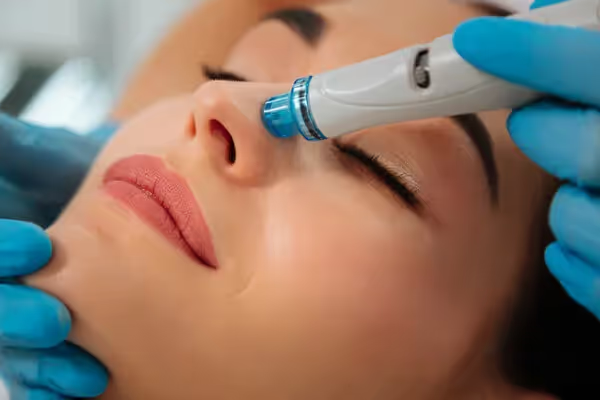
HydraFacial Steps: What Does HydraFacial Do?

Regular HydraFacial treatments are ideal for women and men who have dull skin, dry skin, and acne-prone skin. This professional skin facial treatment can also diminish the look of fine lines and improve skin tone. ‍Este’s Excellent EP Facial Reviews From People You Know!‍Hollyoaks Heartthrob Owen Warner: You are never too young to start a personal skincare regime with regular HydraFacial treatments. ‍Faye Brookes let us share her customised Este HydraFacial on Instagram. ‍Too Hot To Handle Harry Johnson says the Este Medical deep cleansing HydraFacial is his favourite treatment for refreshing his skin. ‍TikTok personality Rumena Begum is a big fan of our Este HydraFacial and she can’t live without it! ‍HydraFacial treatments are for everyone! Let’s talk about HydraFacial benefits and how consistent HydraFacial treatments will keep your skin looking fresh and firm throughout the year. ‍What Is A HydraFacial?A salon or cosmetic clinic HydraFacial is a multi-step skincare treatment that gives your face a reboot. HydraFacial results do last a long time, about 2 to 4 weeks depending on at-home skincare. This is why we recommend you have a HydraFacial treatment every month. HydraFacials are intensive; this skincare procedure gets down deep into the skin and cleans better than most basic facials. HydraFacial is one of the best exfoliating, cleansing, anti-ageing treatments available. When it comes to a HydraFacial treatment the emphasis is on skin renewal and rejuvenation (i.e., deep exfoliation, lymphatic draining, intense hydration). The good news is HydraFacial treatments are skin-safe and gentle enough for you to have on a monthly basis. The best skincare is regular, proactive skincare. Here’s what a HydraFacial may involve depending on which clinic you go to. ‍What Are The HydraFacial Steps?Skin analysisCleansingExfoliationExtractionInfusionHydration Before and After‍Skin Analysis & HydraFacial CustomisationBefore your first HydraFacial we recommend you have an in-depth skin assessment. Some of Este UK clinics use Visia Digital Skin Analysis to evaluate the true condition of your skin. The information a Visia digital imaging scan provides will reveal skin issues on and below the surface. With the information gathered from a skin assessment your first and following HydraFacial sessions can be customised to your specific skincare needs. At Este Medical Group, we offer customised HydraFacial treatments that target your skin conditions and concerns. Contact us to book a skin assessment today. . ‍HydraFacial CleansingThe amazing HydraFacial technology uses a small ‘vacuum cleaner-like’ cleansing device to extract dirt, dry skin cells, and oily grime from the face. This mini cleaning device sucks up all the impurities from the surface of your skin, especially around problem areas like the nose, T-zone, and chin. This skin vacuuming brings excess sebum and dead skin cells to the surface, which are then exfoliated away. The whole process stimulates lymphatic draining to detoxify the skin and increase healthy blood circulation beneath the skin’s surface. After the HydraFacial deep cleansing step, it is the right time to address surface texture, skin tone, and skin hydration. HydraFacial Exfoliation & ExtractionDuring the HydraFacial exfoliation step, the skin’s surface is treated with a skin-safe solution containing glycolic acid and salicylic acid to further refine the pores and surface texture, as well as brighten and firm the skin. Glycolic acid helps to exfoliate, increase skin cell renewal, and boost collagen; and salicylic acid is anti-inflammatory and antibacterial, which is particularly good for acne skin. This is followed by the application of a solution with honey extract and salicylic acid to soothe and heal. Skin exfoliation is key to improving the look of dull, tired skin, as well as cleaning up whiteheads and blackheads, and diminishing the look of wrinkles. Would you like to book a UK HydraFacial treatment with Este Medical? Contact us through our website to get started! ‍HydraFacial Infusion & HydrationSkin exfoliation is followed by the topical application of a mix of antioxidants, peptides, and hyaluronic acid that work to plump and moisturise the skin at a very deep level. Your face is treated with a moisturising serum to lock in hydration and ensure your complexion is glowing and radiant. This step nourishes your skin and drenches it in moisture. A LED light bath completes the treatment. This part of the treatment uses low-level light therapy that has many skincare benefits; the light bath stimulates production of collagen (i.e., the protein responsible for younger-looking skin), reduces redness, helps eliminate acne-causing bacteria, and reduces the appearance of fine wrinkles. HydraFacials are excellent at improving the skin’s texture, making it feel smoother, because of the deep exfoliation process. Dead, dry skin cells on the surface are no longer in the way. After a HydraFacial, your skin will feel smoother and have more volume, the colour will be more even, fine lines will be fewer, and your face will be more lifted and firmer. ‍What are HydraFacial side effects? Should I be worried? No, you should not be worried about having a HydraFacial. This treatment is for all genders, and all skin types. Whatever your age, having a HydraFacial will prove effective. Really the only side effect, which is absolutely natural as a response to increased blood circulation beneath the skin’s surface, is some skin redness, which should fade quickly. Does HydraFacial sound like skincare you want to experience? Find an Este Medical UK clinic near you to make an appointment. ‍What Are HydraFacial Benefits?If any of these skin conditions are a problem for you, then you will benefit from regular HydraFacial skincare sessions. ‍Dull, dry skin from improper exfoliation. HydraFacial will boost collagen production and infuse skin with natural moisture.Skin pigmentation: HydraFacial treatment serums rich in antioxidants will reduce the appearance of hyperpigmentation; HydraFacial skin resurfacing improves skin tone.Sun and UV damage: HydraFacial rehydrates the skin, reduces wrinkles and corrects hyperpigmentation.Wrinkles: HydraFacial treatment minimises pore size and diminishes lines.Oily skin: HydraFacial clears excess sebum and dead skin cells from the surface and pores of the skin.Whiteheads, blackheads, acne spots: HydraFacial exfoliation will remove pore-clogging impurities; HydraFacial resurfacing will diminish the look of acne scars.Saggy skin: HydraFacial treatment boosts collagen

HydraFacial Steps: What Does HydraFacial Do? Read More »

How to Stop Hair Growth on Face & Chin

How to Stop Hair Growth on Face & Chin

A proven solution for unwanted hair on the face is laser hair removal.The procedure is not that different from laser hair removal body treatments.For women and men dealing with excessive and unwanted hair growth on their faces it’s good to know that there is a practical and permanent treatment, facial laser hair removal, that goes beyond what shaving, hair tweezing, and facial waxing could ever accomplish. We hope our guide to facial hair removal will help people of all genders manage and reduce unwanted and excessive facial hair, and come to better understand the real life benefits of laser hair removal. ‍Facial laser hair removal treatments can target unwanted hair over the lip and around the mouth, on the chin and cheeks, between the eyebrows, at the nose and ears, and along and down the neck area. You can book a hair removal consultation with Este Medical in the UK to discuss reducing and eliminating hair on your body and face. ‍Guide To Eliminating Excess Hair Growth On FaceLet’s start by talking about why women and some men may want to remove or reduce excessive facial hair. ‍Excessive Female Hair Growth ConcernsSince ancient times female body hair growth has been a cosmetic issue women have sought solutions for with beeswax and sugar based waxes to abrasive pumice stones. These days women don’t have the time or patience for these old world remedies; these days modern women can visit a cosmetic clinic to get rid of female lower back hair and stop hair from growing on legs, arms, underarms, bikini line, and face (e.g., chin hair, lip hair) with laser hair removal devices like the ones Este Medical uses. ‍Este UK clinics use the latest skin-safe hair removal technology: Soprano Platinum and Soprano Titanium machines. Non-invasive laser hair removal is a fast and safe way to reduce unwanted hair and hair growth. ‍Excess Facial Hair Women: Causes & Treatment‍What is the reason behind excessive facial hair for women? Excessive facial hair growth in women, a condition known as hirsutism, can be attributed to a variety of factors. Causes of hirsutism (most often noticeable around the mouth and chin) are mainly linked to an excess of male hormones (i.e., androgens), primarily testosterone. When it comes to hair growth on women’s faces, hirsutism is identified by stiff, thick, or dark hair, appearing on the skin where women don’t commonly have hair growth — primarily the face, chest, and lower back for example. ‍Can you get rid of hirsutism? Yes, hirsutism can be treated, but it may not be completely eliminated. Treatment options can include medication to regulate hormones, and hair removal methods like professional laser hair removal to reduce excessive facial or body hair. The effectiveness of treatment may vary depending on the underlying cause of hirsutism, we recommend you book an Este Medical consultation to discuss how our UK laser hair removal treatments can benefit you. ‍The common reasons for excessive facial hair in women are:Ageing: As women age, their hormone levels change, leading to changes in hair growth patterns. Women often notice an increase in facial hair as they get older (see menopause).Hormonal Imbalances: One of the most common causes of hirsutism is hormonal imbalances, such as elevated levels of androgens (male hormones) like testosterone. Conditions like polycystic ovary syndrome (PCOS) can lead to increased androgen production and excessive facial hair growth.Family History: Genetics plays a role in determining hair growth patterns. If other women in a woman’s family have experienced hirsutism, there is an increased likelihood that she may also develop excessive facial hair.Medications: Certain medications, such as anabolic steroids or medications with hormonal effects, can contribute to unwanted facial hair growth.Treatment options for excessive facial hair in women can include medications to regulate hormone levels, as well as hair removal methods like shaving, waxing, and facial laser hair removal. Excessive Hair Growth In Men: Why Have Laser Hair Removal?Males tend to seek out professional laser hair removal to permanently remove facial hair for aesthetic reasons. Laser hair removal for men can be used to remove hair from the face, chest, back, and other body parts. Excessive hair growth in men is a common and natural occurrence, typically driven by male hormones (androgens) and genetics. It can result in dense and thick hair growth on areas like the face, chest, back, and arms. Whether it’s to reduce bushy eyebrows or remove a monobrow, or help shape the lines of a beard, laser hair removal for males is more effective and long lasting than shaving or tweezing. ‍Top Tips On How To Find A Laser Hair Removal Clinic In The UK. See our Este Medical advice to find the best laser hair removal clinic for face and body treatments. ‍How To Stop Hair Growth On The FaceTo stop hair growth on the face, you can try at-home methods like shaving, waxing, or using hair removal creams. The best option is professional laser hair removal for the face, which is a more permanent solution than shaving for example. In some cases, medications may help reduce facial hair growth, but it’s important to consult with a doctor for the best approach based on your medical history. We recommend you arrange a facial hair removal consultation with one of our hair removal experts at Este UK! ‍Let Este Medical Help You To Stop Hair Growing On FaceWe understand how emotional it can be to live with visible facial hair that is unwanted, or how challenging it can be to transition to a hair-free face. At Este Medical Group we have tons of male and female client recommendations — look at our 5-star Trustpilot recommendations for laser hair removal! ‍Arrange a hair removal appointment today, and make a start on eliminating unwanted facial hair with Este UK laser treatments! Last Updated: November 7, 2023

How to Stop Hair Growth on Face & Chin Read More »

How To Lighten Armpit Pigmentation. Results of Underarm Peel

How To Lighten Armpit Pigmentation. Results of Underarm Peel

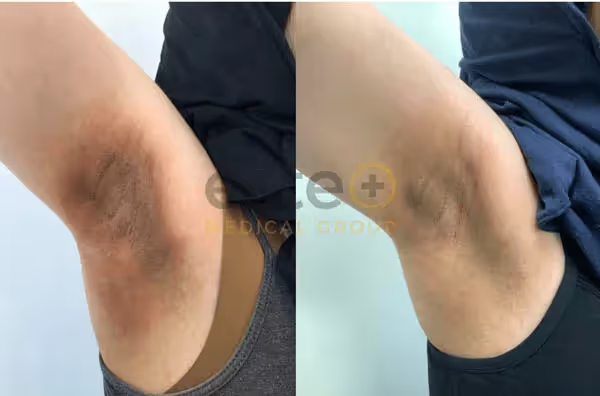
Astounding skin lightening results for an Este Glasgow client who had underarm dermamelan peel treatment for severely dark hyperpigmentation and discolouration in the armpit area.Before and After ResultsBefore and After ResultsYou can see in the before photo how dark the skin is in the treatment area. The skin of this armpit is a mix of uneven colours, from red looking skin to dark brown almost dark grey skin. This discoloured patch of underarm skin doesn’t look very healthy or vibrant. In the armpit depigmentation after treatment photo, you can see a huge improvement to the skin tone from having armpit dermamelan peel to lighten the skin in this area. The armpit skin now looks much more normal and in harmony with the body’s overall skin tone. ‍What Does Armpit Skin Lightening Do?At Este Medical we use skin-safe lightening treatments, like the effective dermamelan peel for intimate areas (e.g., bikini line, underarm area), as it is not uncommon for these two areas to look darker due to hyperpigmentation. The dermamelan peel treatment is specifically designed to treat hyperpigmentation and general discolouration in the armpit and along the bikini line. This intimate peel uses a special combination of active ingredients like kojic acid and phytic acid to reduce skin discolouration and even out skin tone. Dermamelan peels are safe for all skin types, and can target unwanted skin pigmentation on the underarm, inner thighs, groin area, and bikini line. ‍What Are Benefits Of Dermamelan Armpit Peel?Because a professional dermamelan peel uses skin-safe ingredients, you will see quick and long-lasting results with an Este UK dermamelan peel. Better skin hydrationPore size reducedPeel regulates oily skin (i.e., sebum production)Peel refreshes and rejuvenate the skin’s surfaceArmpit skin tone is improved and looks lighterBeware of skin bleaching products that are not professionally formulated, as prolonged exposure to skincare products that use harsh chemicals can cause skin rashes, scarring, and skin thinning unfortunately. ‍The best way to get brighter and healthier armpit skin is by having a professional, proven Este Medical Group skincare treatment. Book your UK dermamelan peel today! ‍How Soon For Results From Armpit Lightening Treatment?There are two parts to the procedure. The first part involves a professional applying the depigmenting formula to the affected areas (i.e., armpits, bikini area). The second part involves you continuing treatment at home following professional direction from the medical clinic. In general, you should start to see treatment results in about two weeks, seeing more visibly clear and brighter-looking skin. Over the next month you should experience ongoing improvement in the treatment area. ‍Don’t Keep Covered Up! Treat Uneven Skin Tone With Este’s UK Depigmentation TreatmentsIf you are embarrassed or concerned about exposing your armpits or pubic area, then you should consider having intimate skin lightening treatments at an Este Medical clinic near you. Contact Este Medical for an intimate armpit or bikini area lightening consultation. Last Updated: October 19, 2023

How To Lighten Armpit Pigmentation. Results of Underarm Peel Read More »

How Many PRP Sessions Are Needed For Hair Growth? & How Often?

How Many PRP Sessions Are Needed For Hair Growth? & How Often?

Why is PRP so popular for hair loss and hair regrowth?Platelet-rich plasma (PRP) hair treatments are popular because they produce significant hair growth results. Numerous clinical studies show that PRP hair injections are effective in treating individuals with hair loss from alopecia — PRP hair therapy helps to natural thickening and strengthen the hair and boosts blood circulation for a healthier scalp and more robust hair follicles. ‍How Many PRP Sessions?A typical PRP session schedule is 6 sessions about 4 weeks apart. Brukey Says Este Medical Saved His Hair! ‍Who is PRP hair loss therapy for?Platelet-rich plasma hair treatments are for men and women who are experiencing varying degrees and different types of hair loss, and individuals who prefer to have a non-surgical hair loss treatment. If you are not sure what type of hair loss you are experiencing, then we recommend you book a hair loss consultation at an Este Medical clinic near you. Types of male hair lossHair loss in womenSaadiya Rahman Shares Her Postpartum Hair Loss PRP JourneyAfter having a baby, our client had extreme hair loss (i.e., postnatal hair loss). After an Este consultation she started customised PRP mesotherapy treatments for about 4 months. Find out why she chose Este Medical Group. ‍Can you combine PRP injections with other hair restoration treatments?Yes, you can combine PRP with laser light hair regrowth treatments. Having laser hair therapy with mesotherapy hair treatments is an excellent way to boost blood circulation to the scalp, which will stimulate cell growth and nurture hair follicles with increased oxygen and growth factors (i.e., platelet-rich plasma). This is an ideal treatment for someone looking for a non-surgical option to hair growth. For those men and women who have decided to have an Este Turkey hair transplant, we highly recommend having PRP hair injections and laser light hair therapy before and after hair graft surgery. Combining PRP and laser therapy with a hair transplant will increase the overall success rate of the procedure. ‍PRP hair injections stimulate inactive or newly implanted hair follicles into an active growth phase. Platelet-rich microinjections combined with mesotherapy for hair is a very efficient technique for slowing hair loss and treating alopecia. 38-Year-Old Birmingham Man Gets New Hair & Teeth in Turkey ‍How does PRP work?PRP treatments are actually very straightforward; during a PRP procedure blood is taken from your body, typically from your arm, like how blood is donated, and then your blood is medically centrifuged (i.e., separated) to gather a platelet concentrate, which is then injected into the treatment site, in the case of hair loss extracted platelet-rich plasma is microinjected into the scalp. ‍What is mesotherapy? The mesotherapy method for hair loss involves microinjections filled with active ingredients such as PRP, vitamins, minerals, and enzymes being injected below the scalp’s surface to the mesoderm. At Este Medical we will customise your mesotherapy treatment solution with the most optimal ingredients to stimulate your hair follicles to grow thick and strong. PRP combined with mesotherapy will help to improve overall scalp and hair health, as well as trigger hair follicles into an active growth cycle. The best way to determine the ideal number of PRP sessions is for you to have an Este UK hair loss consultation. During a professional consultation our hair loss experts can discuss with you growth factors that will influence PRP session frequency. Send us a message to book your first PRP treatment session with Este Medical Group. ‍Is PRP worth it?We have many female and male clients who will tell you that PRP hair loss treatment is worth it! ‍Young woman has astonishing hair regrowth after having Este Medical PRP treatment combined with laser light hair therapyBy combining these two non-surgical hair loss treatments our client was able to grow back hair over a large bald patch on the top of her head. Este’s CEO has PRP for hair & skincare!Even our Este Medical CEO, Sam Cinkir, has regular PRP treatments for hair restoration maintenance and facial rejuvenation. ‍Choose Este UK for your expert hair loss treatments‍PRP hair loss treatments are a proven way to start your hair restoration journey with Este Medical. To get you on that journey, we are offering a special 10% off PRP treatments. *Offer subject to change Our Este hair loss clients are always thrilled with how fast they see results from PRP. Within 1 or 2 treatments with PRP you will start to have better hair texture, plus your hair will start to thicken and new hair growth will begin in the treatment area of your scalp. All you need to do is fill out a form to redeem your 10% offer and book a PRP consultation. *Offer subject to change Last Updated: September 28, 2023

How Many PRP Sessions Are Needed For Hair Growth? & How Often? Read More »

How Many Hair Transplants Are Possible? What’s The Limit?

How Many Hair Transplants Are Possible? What’s The Limit?

Are you wondering, ‘how many hair transplants can you have in your lifetime?’ You’re not alone.Both men and women facing various types of hair loss, even those who’ve already undergone a transplant, may still find the need for additional hair grafting procedures in the future. ‍How Many Hair Transplants Can A Person Have?The prevailing view indicates that three hair transplants might be the limit. However, if you possess an ample supply of hair in your donor area (i.e., healthy follicles available for transplantation), then depending on the type of hair transplant procedure (e.g., FUE, DHI…) and where on the scalp the hair grafts are going, you may not be limited to how many grafts you can have. ‍How Many Hair Transplants Do I Need?While many women and men achieve their hair grooming goals with one hair transplant, others choose multiple treatments. Research shows that only a small percentage of people undergo a second transplant, and a third procedure is even rarer. There are a few reasons that might call for having additional hair grafts beyond your first hair transplant procedure. For instance, some people will unfortunately have an unsuccessful transplant at a low-cost facility and need a second hair transplant procedure at a more qualified and reputable hair clinic; other individuals may be seeking repair work to a previous hair transplant through the addition of extra hair grafts. Additionally, your rate of hair loss could determine how many hair transplants are required in your lifetime, along with hair maintenance treatments like PRP and PRF micro-injections, and laser hair growth therapy. Hair transplants like FUE and DHI are considered safe and have a high success rate. Advanced techniques and modern hair grafting tools have led to exceptionally successful hair regrowth for both men and women who undergo hair restoration surgery. Most people only require one hair transplant, or have one hair transplant in their lives. Contact Este Medical to book a hair transplant consultation today ‍How Many People Get Hair Transplants?‍Hair transplants are more common than you think! Worldwide, hair transplant procedures have become increasingly popular, with hundreds of thousands of individuals undergoing hair grafting surgeries annually. The number of people seeking hair transplants has risen due to advancements in technology, more hair transplant service providers available, and a growing acceptance of cosmetic hair loss procedures. ‍How Many Years Hair Transplant Last?The longevity of a hair transplant can vary based on factors like the type of hair loss and the rate of ongoing hair loss, as well as your age and overall health. Generally, the results of a hair transplant are permanent. Periodic hair loss consultations with a healthcare professional or hair loss expert can offer up personalised insights into the potential longevity of the procedure based on individual circumstances. Are you experiencing a higher rate of hair loss due to menopause, age, or health issues? Book a hair & scalp consultation with Este Medical Group to see if another hair grafting session is in order, or if non-surgical hair loss treatments are more suitable (re: laser hair treatment, PRP scalp therapy, platelet-rich fibrin therapy). ‍FUE Hair Transplant: How Many Grafts Do I Need?Whether you’re undergoing a FUE transplant or Direct Hair Implantation (DHI hair transplant), your transplant consultation will involve assessing the extent and type of your hair loss. Additionally, your consultant will gather information about any prior hair loss treatments, both surgical and non-invasive, during your hair grafting appointment. Before it can be determined how many grafts are needed for a hair transplant the following scalp and hair factors need to be addressed by your hair loss service provider: How large is the area to be treated?How thick do you want the hair to be?How bald is the area already?So, in answer to your question, ‘how many grafts do I need hair transplant?’ much depends on scalp health, how big the treatment area is, and your hair regrowth expectations. The average FUE hair transplant involves around 4,000 grafts. This is typically enough to cover the front, middle, and crown areas with a good density of hair. On average, a hair transplant may involve anywhere from a few hundred to several thousand grafts. We strongly recommend you consult with a qualified hair restoration expert who can assess your specific situation and provide personalised recommendations. Send us a message through our website to book a professional hair grafting assessment now! ‍How Many Days After Hair Transplant Are Grafts Secure?It doesn’t take long, especially with the best hair transplant aftercare. The initial days and weeks after a hair transplant are important for the healing and securing of hair grafts. Typically, post-surgery hair grafts are secure after about 10 to 14 days. Hair growth is a gradual process, and individuals will start to see noticeable results within a few months. If you are wondering about hair transplant how many grafts do I need, our Este hair restoration experts can help you! ‍How Many Hair Transplants Can I Have?There are options open to having more than one hair transplant surgery. However, this question often arises: how many hair transplants can you get versus how many hair transplants do you need? As we have discussed above, while the number of hair transplants an individual can undergo might have limits, we recommend your focus be on what factors are ideal for multiple hair grafts in your case of hair loss. The decision on the number of hair transplants required is influenced by individual goals and needs. While some individuals find success with a single procedure, others opt for multiple treatments to meet their specific objectives. Research shows that the majority of people achieve their desired results with one or two transplants, making it a reliable and effective hair loss solution. In essence, the journey toward hair restoration is a journey toward confidence, self-esteem, and personal satisfaction. The balance between how many hair transplants one can undergo and how many are truly needed is a delicate consideration. With the advancements in modern hair transplant techniques, the

How Many Hair Transplants Are Possible? What’s The Limit? Read More »

How Long Does it Take to Recover After a Hair Transplant?

How Long Does it Take to Recover After a Hair Transplant?

At Este, we’ve helped many men and women achieve the hair they’ve always wanted through our ground-breaking before and after care, coupled with our successful hair transplant technology. Here, we discuss everything that’s involved in hair transplant surgery recovery. Hair Transplant RecoveryThe hair transplant recovery timeline will vary slightly from person to person, but you can take the following stages as a general rule of what to expect during your healing period. When you have a hair transplant, you will have hair follicles from a donor site (the back of your head, neck, or somewhere else on your body where hair growth is thicker) transplanted into the recipient site (the site where you need more hair). How Long is Recovery After Hair Transplant?Stage OneAfter around a week to 10 days, you will notice the skin grafts fall off. Then, around three to four weeks later, the hair that was transplanted sheds. This might seem shocking but it is an entirely normal part of the hair transplant stages of recovery. Paul 3 Weeks After His Hair Transplant: Stage TwoOnce this transplanted hair has fallen out, it’s a bit of a waiting game for your hair follicles to recover from their transplantation, and start producing new, fresh hair growth. This generally happens around three months after the initial shedding. Stage ThreeOnce your new hair is growing you can expect it to increase in length at roughly the following rate of growth: 0.05cm each day0.5cm per ten days of growth1.5cm a monthWith these growth rates in mind, you will appreciate that it will take a fair number of months before you truly appreciate the results of your hair transplant. Our clients generally start to enjoy a noticeable difference to their hair at around eight to 10 months post-transplant. To give you an idea of what you can expect, here’s an 8 month hair transplant update. Some of our clients have been lucky enough to see incredible results at the 7-month mark. Here’s our client Chris talking about his Este hair transplant experience, and the results he enjoyed at month seven. ‍ Stage FourAt one year post hair transplant, you will notice your best results. After this time, your hair will keep growing as normal and can be cut and styled as you choose. Hair transplants are permanent and should last for the rest of your lifetime. Female Hair Transplant Before & AfterFemale Hair Transplant Before & AfterSide Effects of DHI and FUE Hair Transplant RecoveryDuring your recovery from your hair transplant, it’s common to experience a few side effects. They are usually nothing to worry about and are all just part of the healing process. The most common side effects you may experience include – A tight, swollen scalpAn ache on your scalpScalp tendernessTemporary scabbing of the skinInflammation of hair folliclesBleeding and/or bruising at the site of transplantTemporary redness of the skin – you will need to stay out of the sun and use UV protectionIf you’re worried about any of these side effects, please try not to be. At Este, alongside our cutting-edge before and after care that’s carried out in the UK, we work with the very best hair surgeons in Turkey, to ensure your hair transplant procedure is a success. Things You Can Do to Help your RecoveryIf you’re looking for ways to speed up your hair transplant donor area recovery site, you could look at taking some specific supplements. Zinc, B vitamins and Biotin have all been found to be helpful during this period of recovery. You can also check out our hair transplant aftercare advice. For examples of hair transplant recovery pictures, take a look at our clients who’ve enjoyed amazing results right here. Why Este Hair Transplants are The BestAt Este, we’re renowned for achieving exceptional results and we do this by always going the extra mile. Hair transplants only work when the hair that’s being transplanted and the donor site are in the best shape possible. At Este, we ensure this is the case by carrying out our unmatched pre-treatment care. Our CEO, Sam Cinkir, explains just why our hair transplants are the best right here. Our before and after treatment really does help when it comes to donor area recovery after hair transplant. Get the Hair you WantBooking your free consultation with the experts at Este is just a few clicks away. Of if it’s easier, just give us a call on 0121 468 0636 and we’ll get you booked in. Last Updated: January 26, 2023

How Long Does it Take to Recover After a Hair Transplant? Read More »

Holiday Do's and Don'ts After Dermal Fillers: What To Know Before You Travel

Holiday Do’s and Don’ts After Dermal Fillers: What To Know Before You Travel

If you’re planning a few cosmetic ‘tweakments’ before jetting off on holiday, it’s important to follow some simple advice to avoid complications after dermal fillers. When it comes to holiday fillers to look younger and more refreshed, don’t leave it to the last second. Fillers often require time to settle, and travel can introduce environmental stresses that may cause swelling, inflammation, and dehydration. To ensure you’re ready to travel after having facial fillers, follow these common-sense tips for a smooth and enjoyable vacation. Este Medical across the UK offers a variety of effective non-surgical face and body treatments to get you looking your best while on vacation. Message us through our website to book a dermal filler consultation before you go on holiday! ‍Sun Exposure & Dermal FillersAs skincare experts, we always advise limiting sun damage, but it’s especially important after dermal fillers, particularly lip fillers. Intense sun exposure can aggravate skin inflammation, potentially leading to increased swelling. To prevent this, wear a wide-brimmed hat and apply a broad-spectrum sunscreen with SPF 30 or higher to protect your skin from UV rays. Additionally, consider scheduling outdoor activities during cooler parts of the day to minimise sun exposure and allow your fillers to settle comfortably. We recommend you use Este Plus recovery and sun protection products: Este Plus Post Procedure Solution, Este Plus Natural Lip SPF 30+ balm and Este’s Supreme SPF 50+ cream. Supreme SPF 50+ creamEP Natural Lip SPF 30Dermal Fillers & FlyingIt’s generally recommended to wait about one to two weeks before flying after having fillers. The change in cabin pressure during flights can occasionally cause swelling and internal bruising, potentially affecting the outcome of your treatment. It’s essential to follow the advice provided by your service provider or consult with your GP if you’re uncertain about the risks involved. ‍Fillers & Exercise TipsIt’s generally advised to wait approximately 48 hours after getting fillers before engaging in intense exercise. Vigorous physical activity can increase body heat and blood flow, potentially aggravating swelling in the treatment area and affecting how fillers settle into place. Opt for light exercises like walking or gentle yoga during this time to minimise the risk of complications and allow your fillers to settle effectively. ‍Hydration & Dermal FillersIn the heat of summer, staying well-hydrated is important, especially after undergoing any cosmetic or medical procedure like dermal fillers. Adequate hydration supports the body’s recovery process, enhancing the effectiveness of treatments. Drinking plenty of water and consuming water-rich foods such as cucumber and watermelon not only helps maintain hydration levels but also promotes overall skin health. This approach ensures you feel refreshed and revitalised while enjoying the sun during your holiday. ‍Tips To Ensure Holiday Fun After Dermal FillersSo, if you’re planning a getaway after dermal fillers, make sure to schedule them at least two weeks before. This gives enough time for any swelling or bruising to settle down. If you do notice some swelling, use cold compresses and keep your head elevated in the shade — it works wonders! Remember to stay hydrated and protect your skin from the sun during your trip to keep looking and feeling your best. Enjoy your vacation to the fullest with help from Este Medical! ‍Make arrangements now to have lip plumping fillers, face lifting fillers, and targeted body dermal fillers for wrinkle reduction and smoother skin — Este Medical has an abundance of dermal filler treatments for summer holiday skin rejuvenation! ‍Book your Este UK dermal filler appointment today! Last Updated: July 9, 2024

Holiday Do’s and Don’ts After Dermal Fillers: What To Know Before You Travel Read More »

Hairline Lowering: Forehead Reduction Using Hair Transplant

Hairline Lowering: Forehead Reduction Using Hair Transplant

There are valid reasons why men and women opt for hair grafts to fill in and lower a hairline. They can include forehead size concerns, gender affirmation, and wanting to create better face symmetry. If you are self-conscious about your wide forehead or high hairline, then lowering your hairline with a hair transplant will reduce the area of your forehead, making it a less dominant feature. ‍Why Is My Forehead So Big?Concerns about the size of your forehead may be subjective, and are often linked to beauty trends and aesthetic standards. In some cultures a wide and tall forehead is considered attractive, denoting wisdom and life experience, but not everyone loves their prominent forehead or high hairline. A big forehead might be the result of a receding hairline, low hair density, or traction alopecia. ‍How To Reduce Forehead SizeHere are a several ways you can adjust the look of your forehead, or reduce a large forehead area: Try contouring makeup techniques to create the illusion of a smaller foreheadHave a hairstyle that includes a longer fringeReshape your eyebrows so they appear more dominantLook into forehead reduction surgeryHave a hair transplant to add hair grafts to your hairline and upper forehead‍Hair transplant surgery is an effective long-term solution if you want a lower hairline. ‍Can Hair Transplant Lower Hairline?Yes, a surgical hair transplant can lower a hairline by inserting hair grafts below the natural hairline, creating a new lower hairline. Este has performed many successful receding hairline transplants for women and men at our medical clinic in Turkey. We are known as the #1 hair transplant clinic in Istanbul! 6 Months After Jay’s Hair Transplant with Este Birmingham‍Book a Este Medical hair transplant consultation to talk about your expectations and goals with having a new and improved hairline! Find out why Este Medical is the best at hair transplants! ‍How Is Hairline Lowering Surgery Done?If you are opting for a hair transplant procedure to lower your hairline, then during your surgery hair follicles or hair grafts will be taken from the back of your head (the donor area) and moved by hand and inserted into your scalp along your new hairline area (the treatment area). Another way to describe a hair transplant is hair grafting. For instance, healthy hair follicles are harvested from a part of the scalp with an abundance of hair (usually the back or sides), and are then ‘grafted’ manually into the treatment area of the scalp. ‍How Many Grafts To Lower Hairline? How many hair grafts you need to lower your hairline will depend on how far you are lowering it. Much depends on the thickness of your hair, the coverage needed, and the area to be treated when it comes to cost. The best way to determine how many hair grafts you will need to reduce your forehead is to have a hair transplant consultation at an Este Medical clinic near you. ‍Este Medical in Turkey offers a few types of hair transplants for forehead reduction: FUE and DHI hair transplants, as well as unshaven and long hair transplants. Arrange a consultation through our website to find out which of these transplant treatments is best suited to you. 77-Year-Old Woman’s Hair Transplant Results!‍How Does Forehead Reduction Surgery Work?‍Can I get my hairline lowered with plastic surgery? Yes, with forehead reduction surgery, also known as hairline lowering surgery (foreheadplasty): a cosmetic procedure that can reduce the size of the forehead. The surgery involves making an incision along the hairline, removing a portion of the forehead skin, and pulling the hairline forward to decrease the amount of visible forehead. ‍Does forehead reduction surgery hurt? The surgery is usually performed under anaesthesia, so patients don’t feel pain during the procedure. However, after the anaesthesia wears off, some discomfort, soreness, and swelling can be expected around the surgical site. Scarring may take place with foreheadplasty. After this type of plastic surgery hair grafts may be required to even out the hairline and cover any scars where hair may have been lost during the surgical procedure. Callum: Este Glasgow Hair Transplant Client 7-Weeks & 7-Months After SurgeryCallum: Este Glasgow Hair Transplant Client 7-Weeks & 7-Months After Surgery‍Which Is The Best Hairline Lowering Procedure?‍Hair transplant vs forehead reduction surgery — which one is best for you? Determining which is better involves considering factors like the patient’s desired outcome (grooming and beauty goals), existing hair density, forehead proportions, and overall facial harmony. ‍Consulting with an experienced surgeon that understands both plastic surgery and hair transplant surgery will be the best way to assess which option aligns better with your goals and individual circumstances. Take a look at our Este Guide: How Does a Hair Transplant Work? 8-Months After Este Hair Transplant, Dazz Says Results Are “Fantastic!”‍Life-Changing Benefits Of Lowering HairlineNow you know ways how to lower a hairline. Take some time to find the most beneficial solution for your long-term goals. If you want to reduce forehead size, then reach out to the experts at Este and make time to talk about the surgical options available to you. Getting a forehead reduction using hair grafts is effective and safe, it’s just up to you to book your procedure. Lowering your hairline, whether through a hair transplant or forehead plastic surgery, can result in many life-changing benefits:Enhanced ConfidenceBetter Self-EsteemImproved Facial ProportionsMore Youthful AppearancePsychological Well-BeingTransform your confidence and appearance with the help of Este Medical Group. Book your life-enriching hairline transplant now!Last Updated: November 30, 2023

Hairline Lowering: Forehead Reduction Using Hair Transplant Read More »

Hair Transplant: How Many Grafts?

Hair Transplant: How Many Grafts?

Are you considering having a hair transplant? If so, your head is probably full of questions like, ‘how many hair grafts do I need?’, or, ‘how many grafts can be taken from donor area?’ What is a Hair Transplant?A hair transplant is when healthy hair follicles are taken from one part of the body and transplanted into an area that is bald or balding. There are three options available to you: FUE Hair Transplant in TurkeyHair Transplant DHILaser Hair Regrowth TreatmentAt Este, we offer high quality, expert hair transplants at our sister clinic in Turkey. We are the only clinic in the world to offer a holistic approach to hair transplants, and by that we mean we look at the whole picture. Before transplanting, we make sure the area that is to receive the hair grafts is healthy and ready, and we do this by treating it with red light therapy to boost blood circulation and hair health. How Many Grafts Do I Need?When it comes to your hair transplant, and how many grafts will I need, it’s important to remember that everyone is different. If you’re wondering how many FUE grafts for crown, or you’d like to know how many grafts are needed for a full head, it depends on a few factors: How large the area to be treated isHow thick you want the hair to beHow bald the area already is If you’re male and want to know what stage of hair loss you’re at, you can use the Norwood Scale to determine your level of hair loss. The Este Medical hair transplant for men can help whatever stage you’re at. How Many Grafts does the Average Person Have?In general, if you’re wondering, how many grafts do I need for FUE, the average hair transplant consists of 4000 grafts. This is usually suitable to cover the front, middle and crown (or vertex) with a decent density of hair. How Many Hairs is 4000 Grafts?People considering hair transplants often wonder how many hairs per graft there are. If you’re looking at having a transplant where 4000 grafts will be taken from your donor site, you’ll be pleased to hear that this should yield around 7200 – 8800 hairs. Josh had 4345 grafts transplanted, which roughly equates to 10,863 hairs: ‍ How Many Hair Grafts for Receding Hairline?If you’re fed up of your receding hairline and want to regain a fuller head of hair, a hair transplant makes a wise move. With regards to how many grafts for hairline, you can expect to need anything from around 800 hair grafts to 1500. This will of course be discussed with you prior to your treatment, and it all depends on the thickness of hair, coverage needed, and area to be treated. How Many Grafts for Beard Transplant?Is your beard patchy? Has it never grown as full as you’d like it to? Thanks to hair transplant technology, you can now achieve a full beard using hair taken from another area of your body. A beard hair transplant is a minimally invasive procedure carried out at our clinic in Turkey. Again, how many grafts you’ll need depends on whether you’re looking for a full beard, a moustache, a little designer stubble, or a goatee. In general, for a full beard, you’ll be looking at needing around 2500 – 3000 grafts. Hair Transplant for WomenHair transplant treatment is often thought of as a mainly male treatment, however it is suitable for women, too. Hair transplant for women can help address hair loss due to factors to do with hormone changes, medication, stress, depression, trauma caused by surgery, dieting, or even just because of tension caused by specific hairstyles. What Results Can I Expect?The hair transplant process takes time. To see the best results, you’ll need to sit tight and wait. With patience, and the right aftercare, you should see results kicking in at around six to nine months post treatment. Check out this article here where you’ll see Chris’s results at 7 months after hair transplant. When you choose Este for your hair transplant you can be assured that you’ll receive the very best in hair transplant technology. We work with you to achieve the best results possible by delivering exceptional pre-and-post treatment care, alongside cutting-edge hair transplant technology. You can find out more about our revolutionary process for hair transplant here: Our results speak for themselves. Just take a look at our before and after photos to see for yourself. To transform your hair and regain your confidence, book your appointment with us today. Last Updated: December 13, 2022

Hair Transplant: How Many Grafts? Read More »