
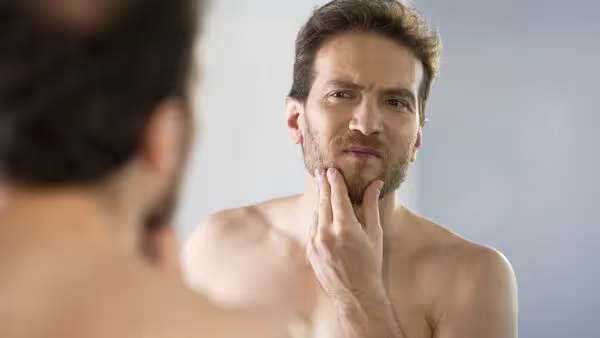
Facial hair is unforgiving. A slightly off angle on the scalp can disappear into the rest of your hair, but a beard sits in the middle of your face, in daylight, at close range. Every gap, every wrong direction and every patch that’s too dense shows.
That’s why choosing a beard transplant provider is worth being picky about, and why it isn’t quite the same exercise as picking a clinic for scalp work. Plenty of clinics do both, but the skills overlap less than you’d think. If you’re looking at options in Glasgow, here’s what’s worth checking before you book anything.
What Should You Check When Choosing a Beard Transplant Provider in Glasgow?
Check that the provider designs beards, not just hair transplants. Ask to see beard-specific results from different angles, how they plan density and growth direction, where the donor hair will come from, who carries out the procedure and where it takes place. Then confirm what recovery involves and what aftercare is included.
What a Beard Transplant Involves
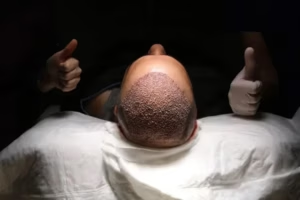
A beard transplant moves hair follicles from a donor area, usually the back or sides of the scalp, to areas of the face where facial hair is thin or missing. The follicles are taken individually and placed one at a time, angled to match the way your beard naturally grows. The result builds gradually over many months.
Our UK-wide guide to DHI beard transplants goes through the technique step by step. This article stays focused on choosing who does it.
Who Might Consider a Beard Transplant?
People look into beard transplants for a few common reasons:
Patchy growth. Some areas fill in while others stay thin or bare.
Sparse facial hair overall. The beard grows, but never gets as dense as the person wants.
Uneven growth. One cheek or side is noticeably fuller than the other.
Scarring. Marks from injury, surgery or skin conditions can interrupt growth.
Shape and definition. Some people want a more defined line along the jaw or cheek.
Suitability depends on your donor supply, your goals and the cause of the patchiness. Some patchy growth has a medical cause worth checking with your GP before you consider surgery, and a clinic should ask about this at your assessment.
How Do I Compare Hair Transplant Clinics in Glasgow?
The checks that matter most are the ones specific to beard work. Here are the five we’d focus on.
Beard Design
A beard has to be designed, not just filled. Ask how the provider plans the hairline along the cheeks, the neckline, the shape of the jaw and the gradual change in density from the edges to the centre. Ask whether you’ll agree to the design with them before treatment starts. A provider who treats the design as an afterthought is a provider to avoid.
Donor Hair
Hair in different parts of the body grows differently, and the donor hair has to behave well on your face. Ask where the grafts will come from, how that area is chosen and what limits there are on how much can be taken. A good provider will also tell you that transplanted hair keeps the characteristics of where it came from, so it may need trimming differently from the rest of your beard.
Graft Planning
The number of grafts depends on the area being treated, the density you want and how much donor hair is available. Be cautious about any figure quoted before someone has seen your face. Ask how the estimate was worked out. The explanation tells you more than the number does.
Results You Can Actually Judge
Ask for beard results, not just scalp results, and ask to see them from the front and from the side. Close-up photos in daylight are more revealing than a flattering studio shot. Check that the lighting looks consistent between before and after photos, and that a timeline is stated. If every photo is at the same angle, ask for more.
Who Does the Work, and Where
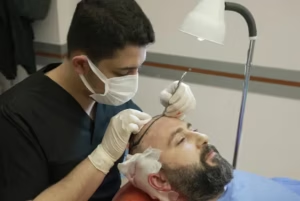
Ask who designs the beard and who carries out each stage. Roles should be named, not summed up as “our team.” Ask where the procedure itself takes place, too. In Scotland, independent clinics are overseen by Healthcare Improvement Scotland, while the Care Quality Commission covers England, so check which regulator covers the site where your procedure happens. Our guide to choosing a hair transplant clinic explains where to verify registrations.
Warning Signs Specific to Beard Transplants
| Warning sign | Why it matters | What to ask instead |
|---|---|---|
| Only scalp results are shown | Beard work needs different design skills | “Can I see beard results from several angles?” |
| A fixed graft number quoted online | It can’t account for your face or donor supply | “How will you work out my graft number?” |
| Promises of a thick, full beard from any starting point | Results depend on your donor hair and the area | “What’s realistic for my facial hair?” |
| Design left until the day | You can’t judge the shape afterwards | “Will I see and agree on the design beforehand?” |
| No mention of donor limits | Donor hair is finite | “How much donor hair is available for me?” |
What Does Recovery Look Like After a Beard Transplant?
Recovery is gradual, and the timings below are general. Your clinic’s own aftercare advice always comes first.
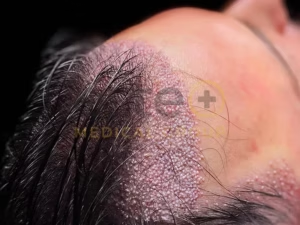
First few days. Redness, mild swelling and small scabs around the treated area, plus some tenderness at the donor area. Your clinic will tell you how to wash and what to avoid.
Early weeks. Scabs clear and the transplanted hairs usually shed. That’s a normal part of the cycle, not a failed result.
Shaving and grooming. Your clinic will tell you when it’s safe to shave or trim, so don’t reach for the razor before then.
Growth. New hairs typically start appearing after a few months, and the beard builds over many more. A full result often takes around a year.
It’s worth planning around the longer timeline. The early stage can look patchier than before treatment, which catches people out if they weren’t warned.
What Affects the Cost of a Beard Transplant?
Cost depends on your individual plan, and a firm figure should only come after an assessment. The main factors are:
Number of grafts. Usually the biggest factor, because each one is handled individually.
Area being treated. A cheek patch and a full beard are very different jobs.
Density you’re aiming for. A fuller result generally needs more grafts.
Technique. Different techniques are planned and priced differently, so ask which is proposed and why.
What’s included. Check whether the quote covers the consultation, procedure, medication, follow-up and aftercare, and ask for it to be itemised.
What Happens at a Beard Transplant Consultation?
A proper consultation includes a conversation about what you want your beard to look like, an examination of your facial hair and your donor area, a discussion of design and density and a graft estimate. You should leave with a written plan and quote.
It helps to bring photos of your beard at its fullest, and to be ready to talk about your shaving habits and how long you’ve had the patchiness. Ask the clinic whether it wants you to let your beard grow before you come, so it can see your natural pattern.
Where Can I Get Hair Restoration Treatment in Glasgow?
At Este Medical Group, Glasgow patients have their beard transplant consultation and aftercare at our clinic on Bath Street. The procedure itself is carried out at Este Surgery, our CQC-registered surgical clinic in Edgbaston, Birmingham. Booking is usually online or by phone. Take a list of questions with you, and don’t feel rushed into a decision on the day.
What Questions Should I Ask Before Booking a Beard Transplant?
- Can I see beard results from patients with facial hair like mine?
- How will you design my beard, and can I approve it first?
- Where will the donor hair come from, and how much is available?
- How many grafts do you expect I’ll need, and how did you work that out?
- What will recovery look like at the treated and donor areas?
- What support is there if my results aren’t what we planned?
FAQs About Beard Transplants
Which Glasgow providers offer beard transplants?
Este Medical Group offers beard transplant consultations and aftercare at our Glasgow clinic, with the procedure carried out at Este Surgery in Birmingham. Whichever provider you consider, compare their beard-specific results, consultation process, approach to beard design, graft planning, practitioner roles and aftercare.
Will transplanted beard hair grow like the rest of my beard?
Mostly, but not exactly. Transplanted hair keeps the characteristics of the donor area, so it may grow at a different rate or feel slightly different from the rest of your beard. Many people trim it occasionally to blend it in. Your clinic should explain this before treatment.
Can I shave after a beard transplant?
Yes, once your clinic says it’s safe. The treated area is delicate in the early days, so shaving too soon can disturb new grafts. Your clinic will give you a timeline and explain how to groom the area as it heals. Follow it closely, and ask if you’re unsure.
Should I grow my beard out before a consultation?
It can help. Seeing your natural pattern lets the clinician judge where growth is thin and plan the design more accurately. Some clinics prefer a few weeks of growth, and others don’t mind. Ask when you book, so you arrive in the way that suits the assessment.
Will taking donor hair affect how my scalp looks?
It shouldn’t if the donor area is chosen and planned carefully. Follicles are usually taken from areas with plenty of hair, and are spread out so the scalp doesn’t look thin. Ask your clinic how much will be taken, from where, and what the donor area will look like afterwards.